Invasive species are plants and animals introduced to a geographic area from another region of the world. An invasive species will expand its range from the site of its original introduction. Populations typically increase rapidly as they lack natural predators in their new, non-native habitats. By displacing native species and disrupting the food web, invasive species can wreak havoc on established ecosystems.
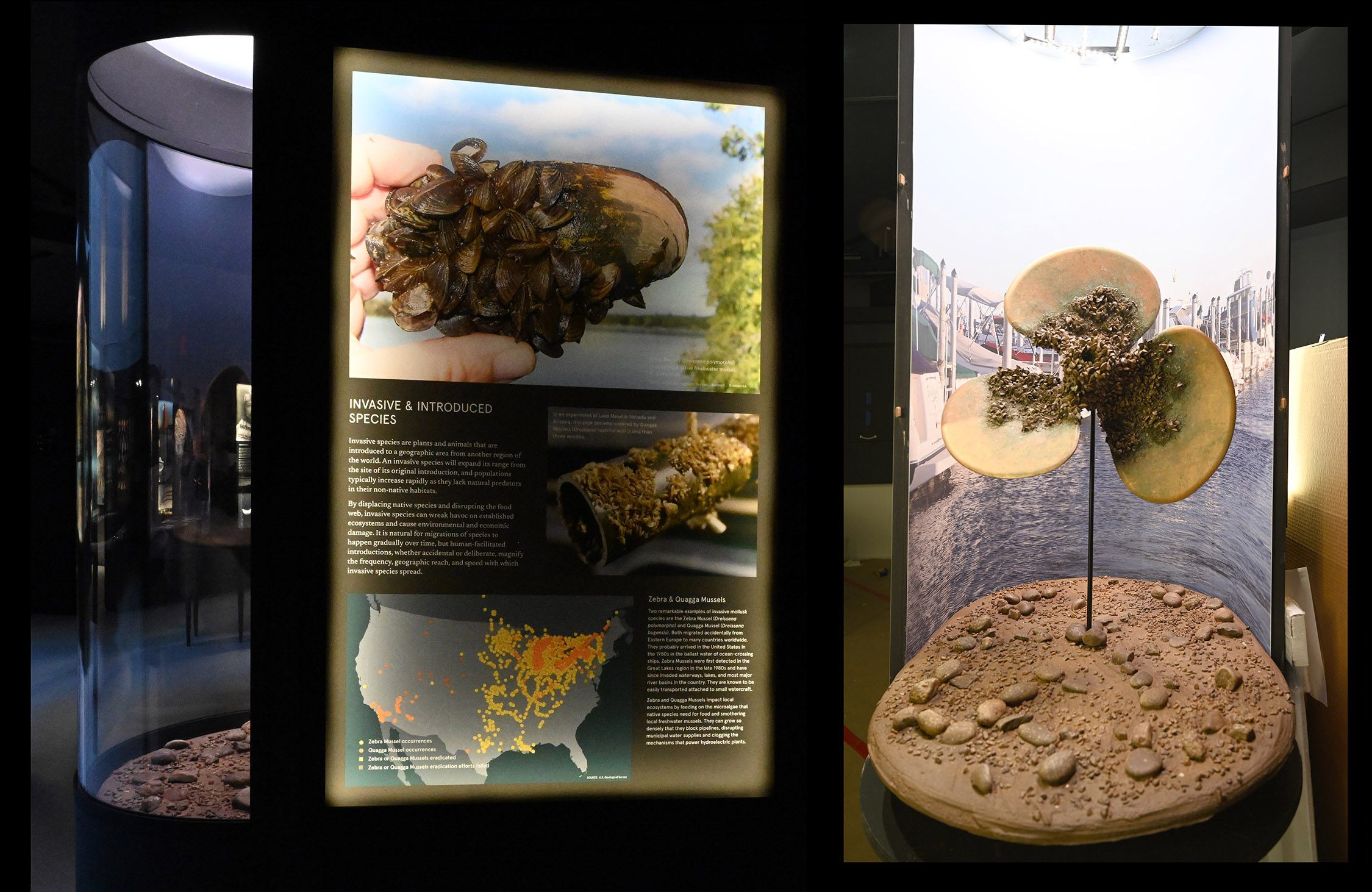
The new set of exhibits in the renovated Great Hall of Shells at the Bailey-Matthews National Shell Museum & Aquarium (BMNSMA) includes an introduction to Invasive and Introduced Species. That exhibit discusses the invasion of the Great Lakes and the upper Mississippi River drainage system by the Zebra and Quagga mussels (respectively Dreissena polymorpha and D. bugensis).
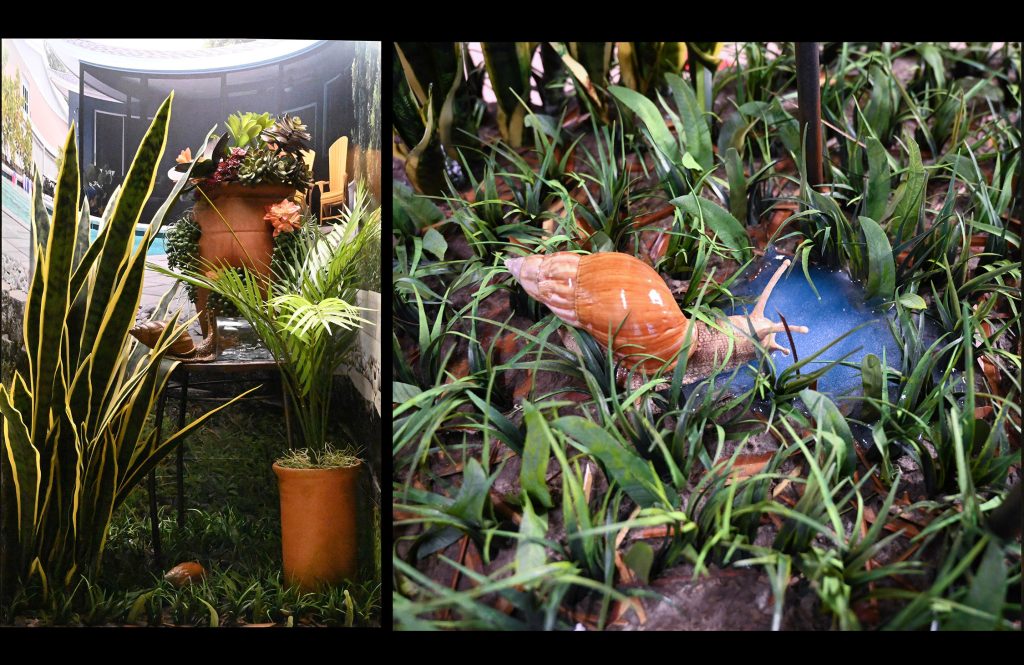
Other new Great Hall of Shells exhibits also examine problems arising from the introduction of non-native species. A diorama in the Kingdom of the Land Snails exhibit explains the repeated invasions of South Florida by the Giant African Snail (Lissachatina fulica).
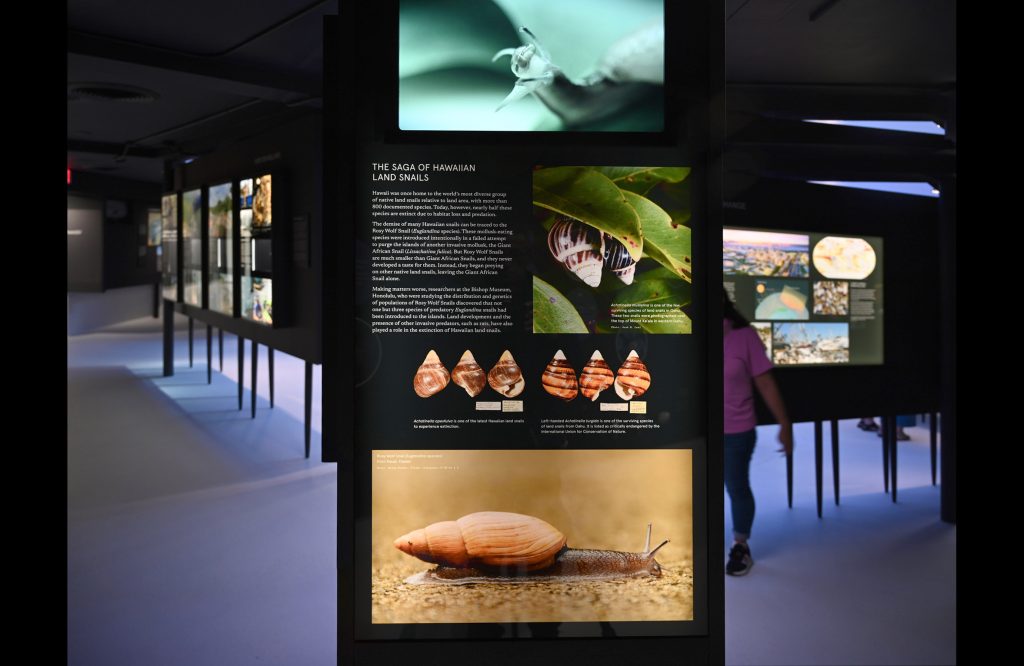
The Saga of Hawaiian Land Snails exhibit examines the massive ecological catastrophe caused by the introduction of Rosy Wolf Snails (Euglandina species) to the Hawaiian Islands. The introduction of the mollusk-eating Rosy Wolf Snail species to Hawai’i was a seriously misguided effort aiming to rid the islands of invasive Giant African Snails. Learn more about these conservation-themed displays during your next visit to the Museum!