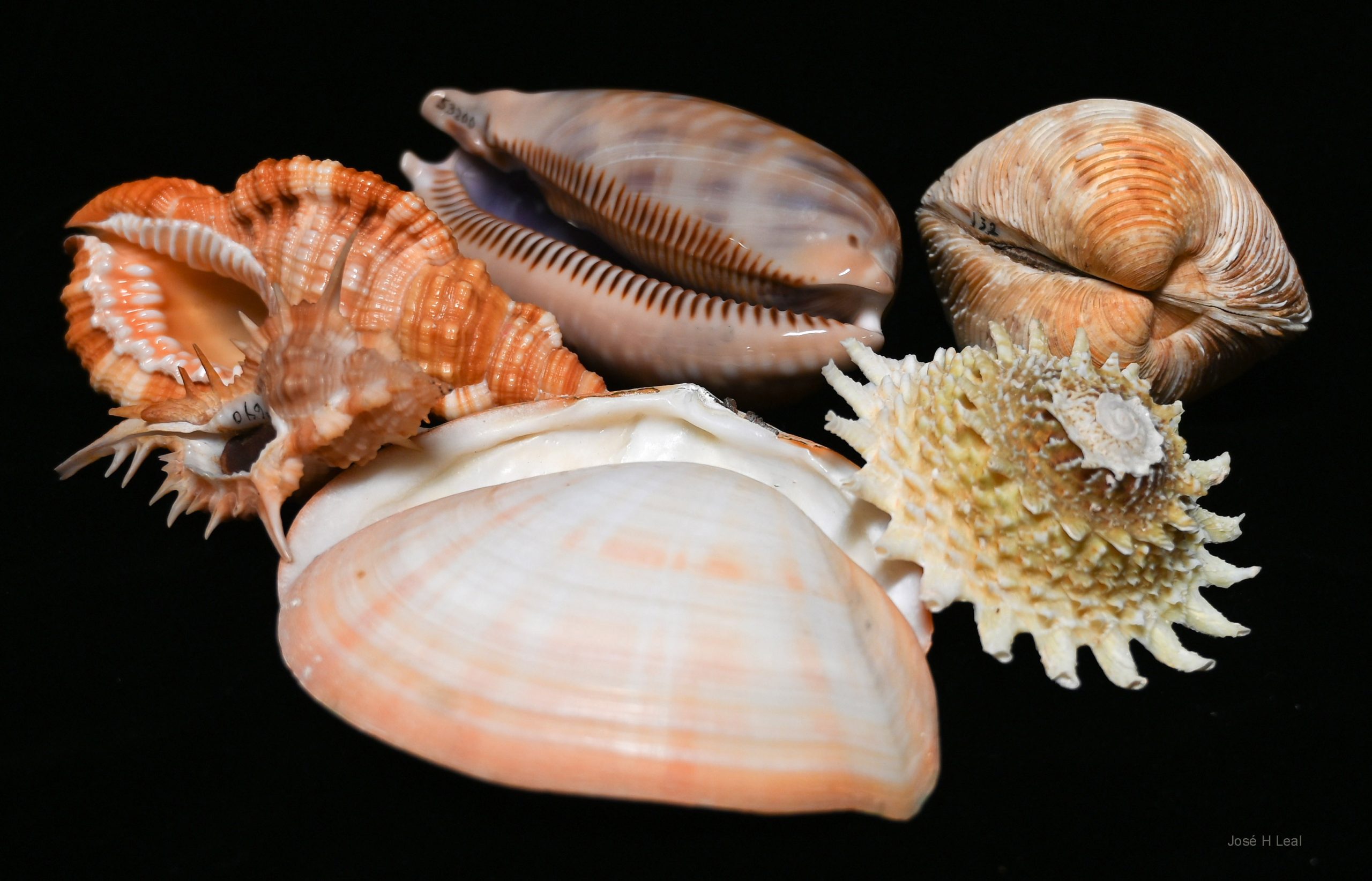
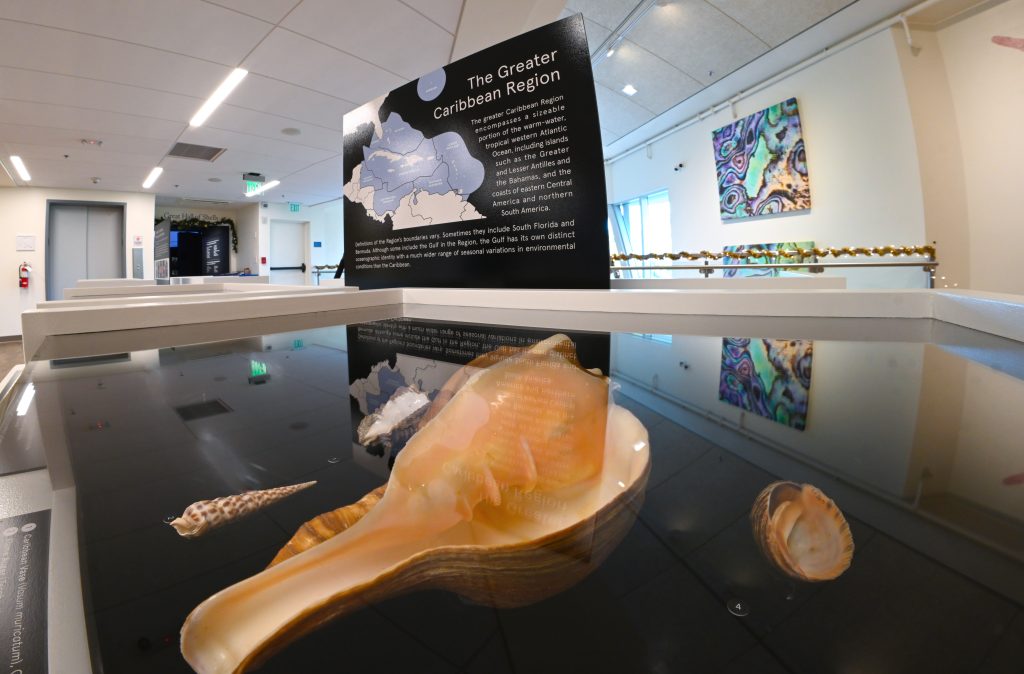
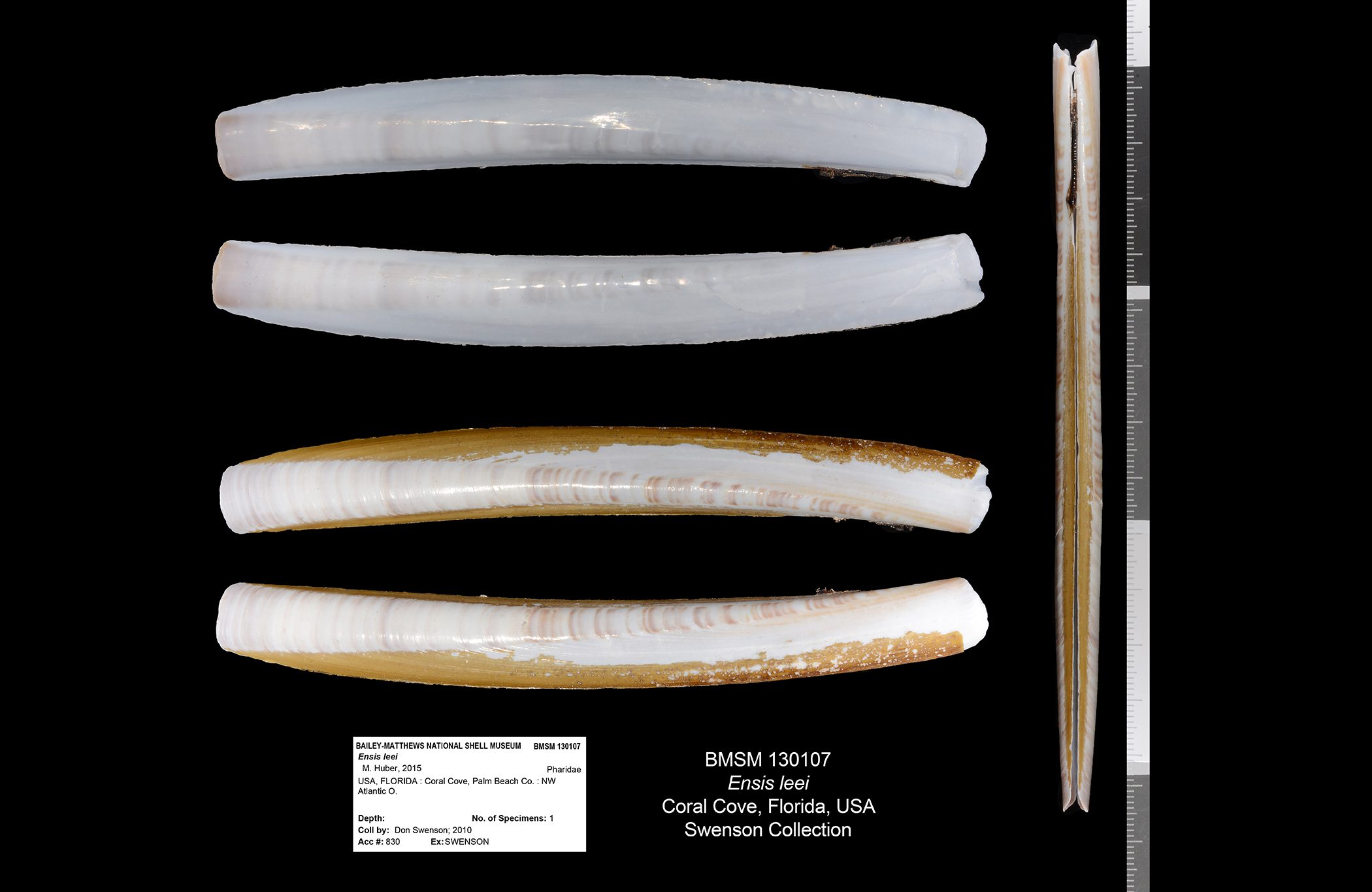
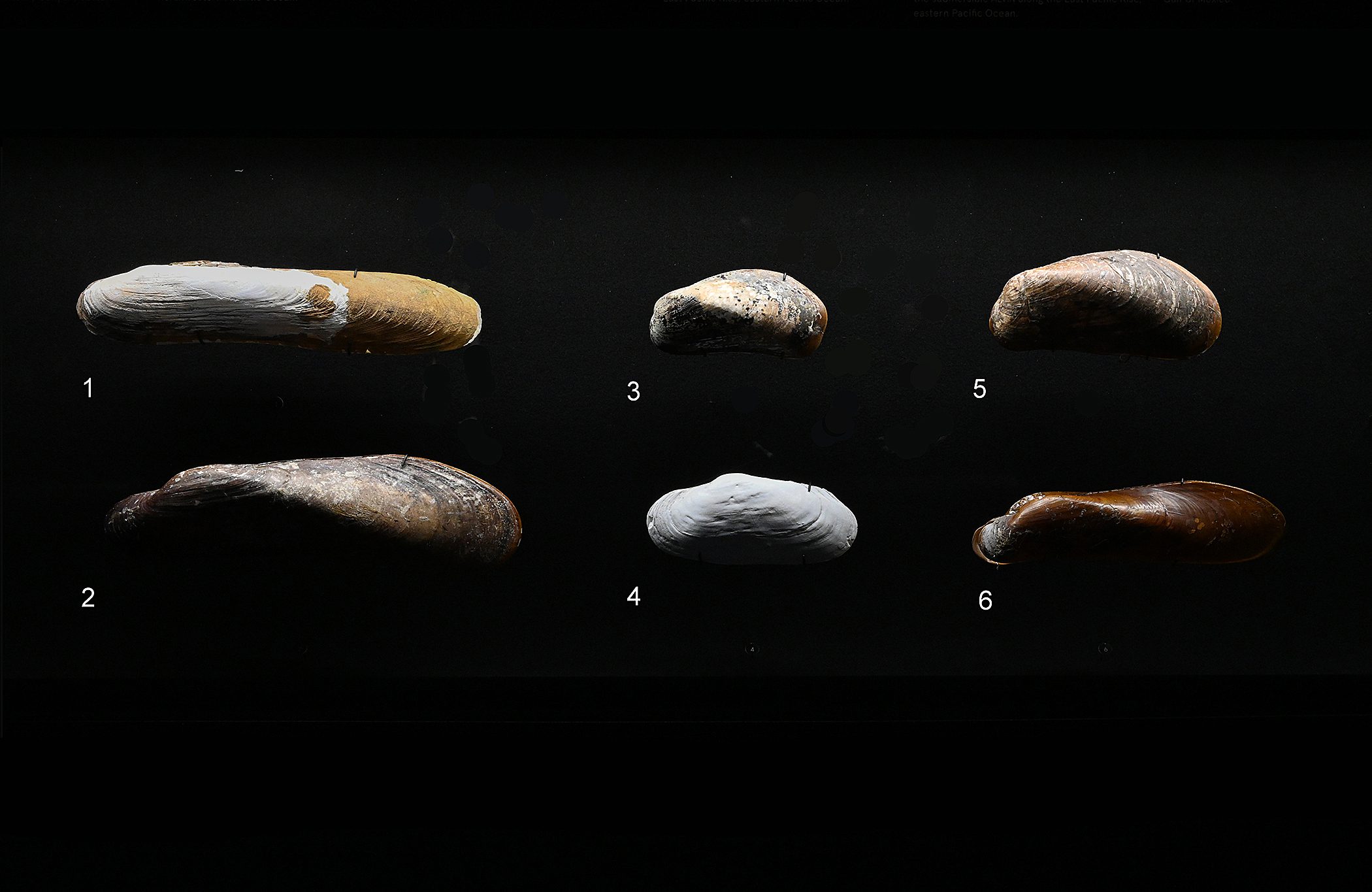
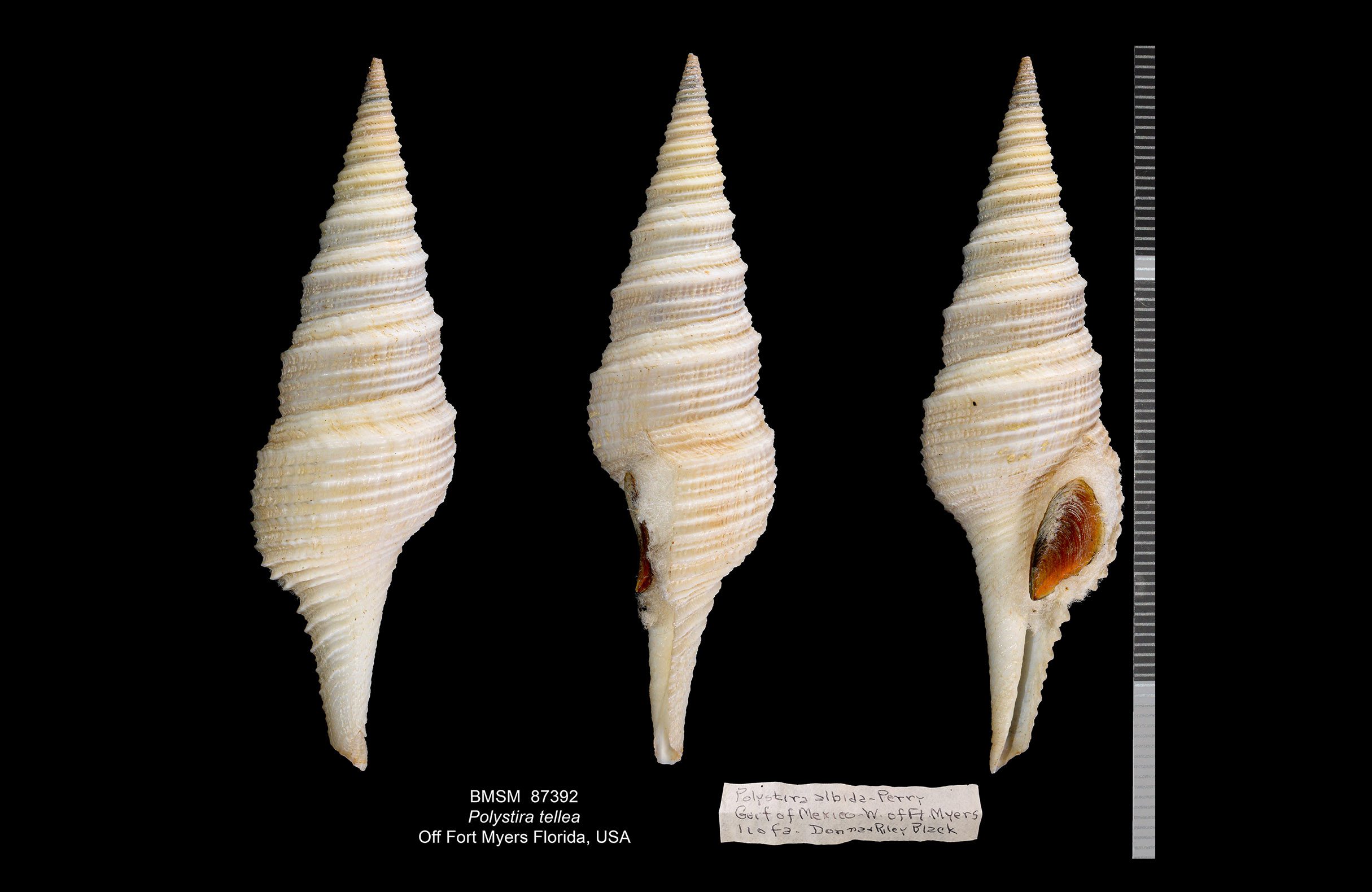
The new temporary exhibit “Paradise Found: Seashells of the Caribbean” displays 46 iconic or rare species of gastropods and bivalves from the greater Caribbean Region. The shells are associated with their common and scientific names and the geographic localities where they were originally collected. The exhibit, located on the second floor of the Museum, will be on display until April 2026.

The greater Caribbean Region encompasses a sizeable portion of the warm-water, tropical western Atlantic Ocean, including islands such as the Greater and Lesser Antilles and the Bahamas, as well as the coasts of eastern Central America and northern South America.
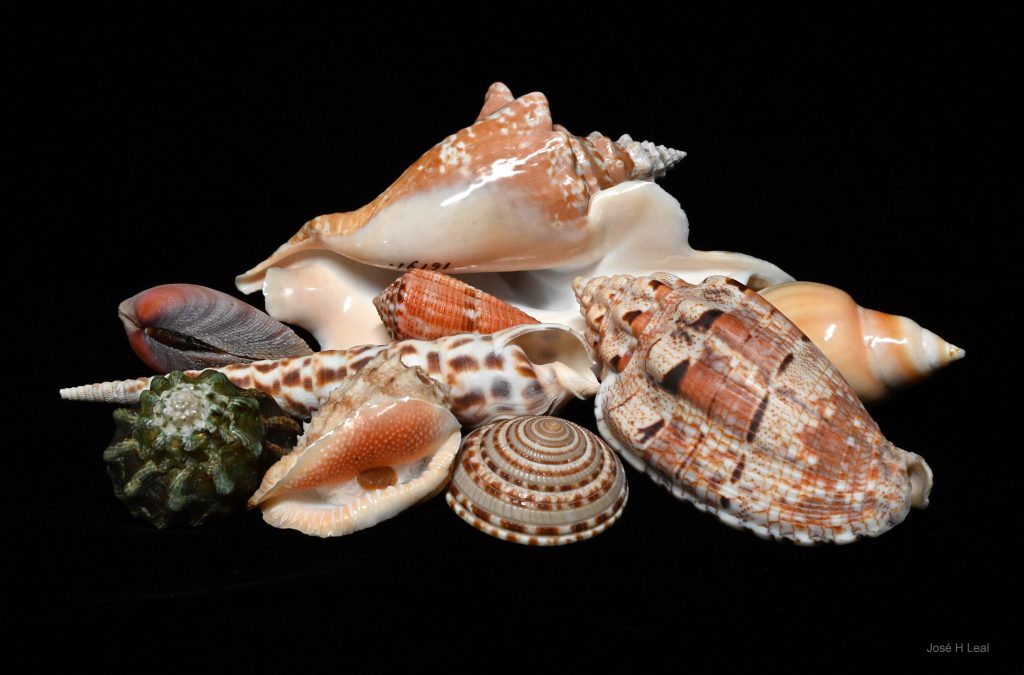
The oceanographic conditions in the Caribbean include warm equatorial currents averaging about 80 degrees Fahrenheit and that vary no more than about five degrees. Environmental factors combined with a complex geological history have led to a rich mosaic of marine habitats such as coral reefs, seagrass beds, mangroves, and others. The diversity of mollusks in the Caribbean reflects that ecological diversity. Learn more about the Caribbean Region and its mollusk in the new exhibit. Don’t miss it!