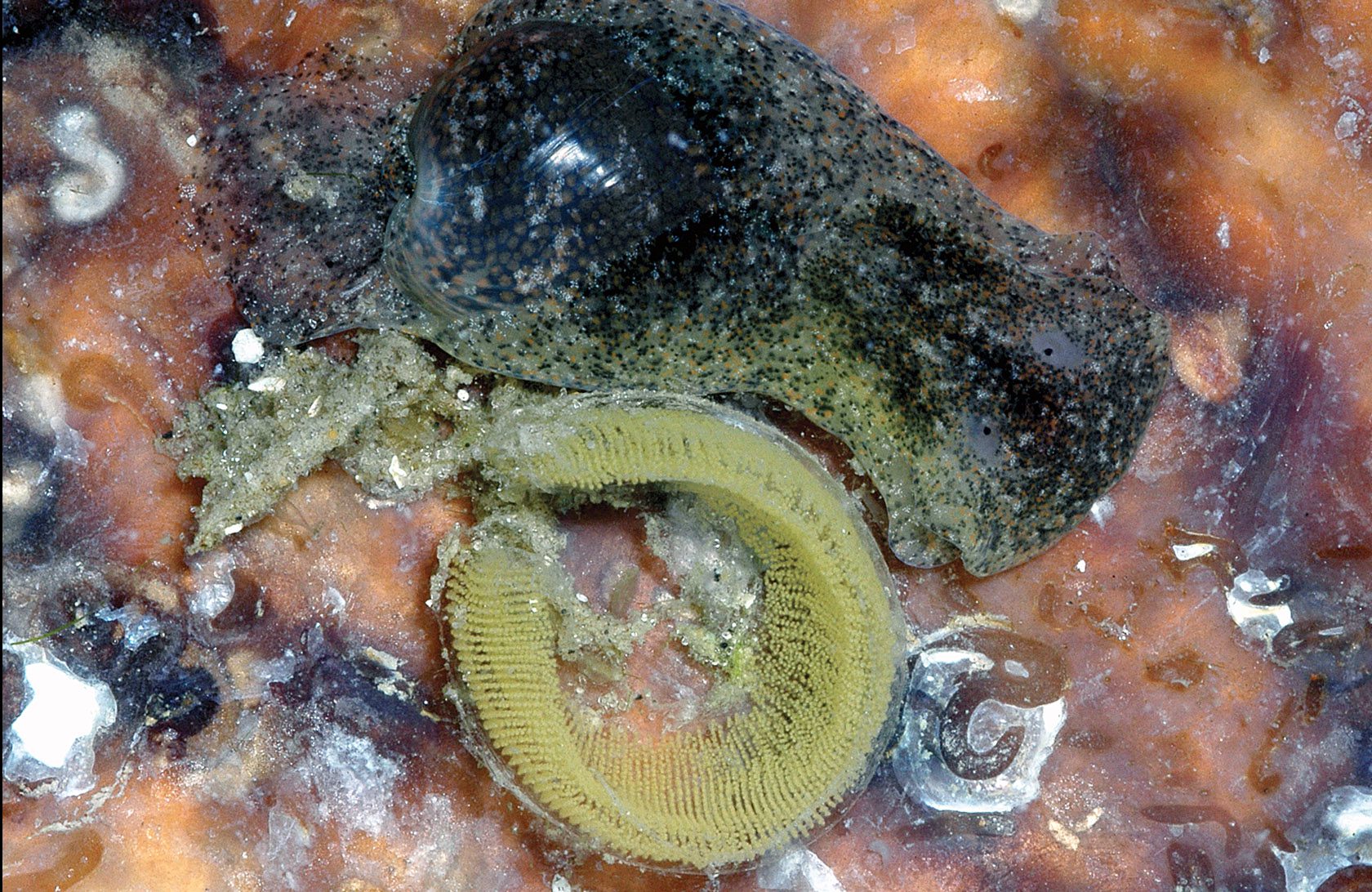
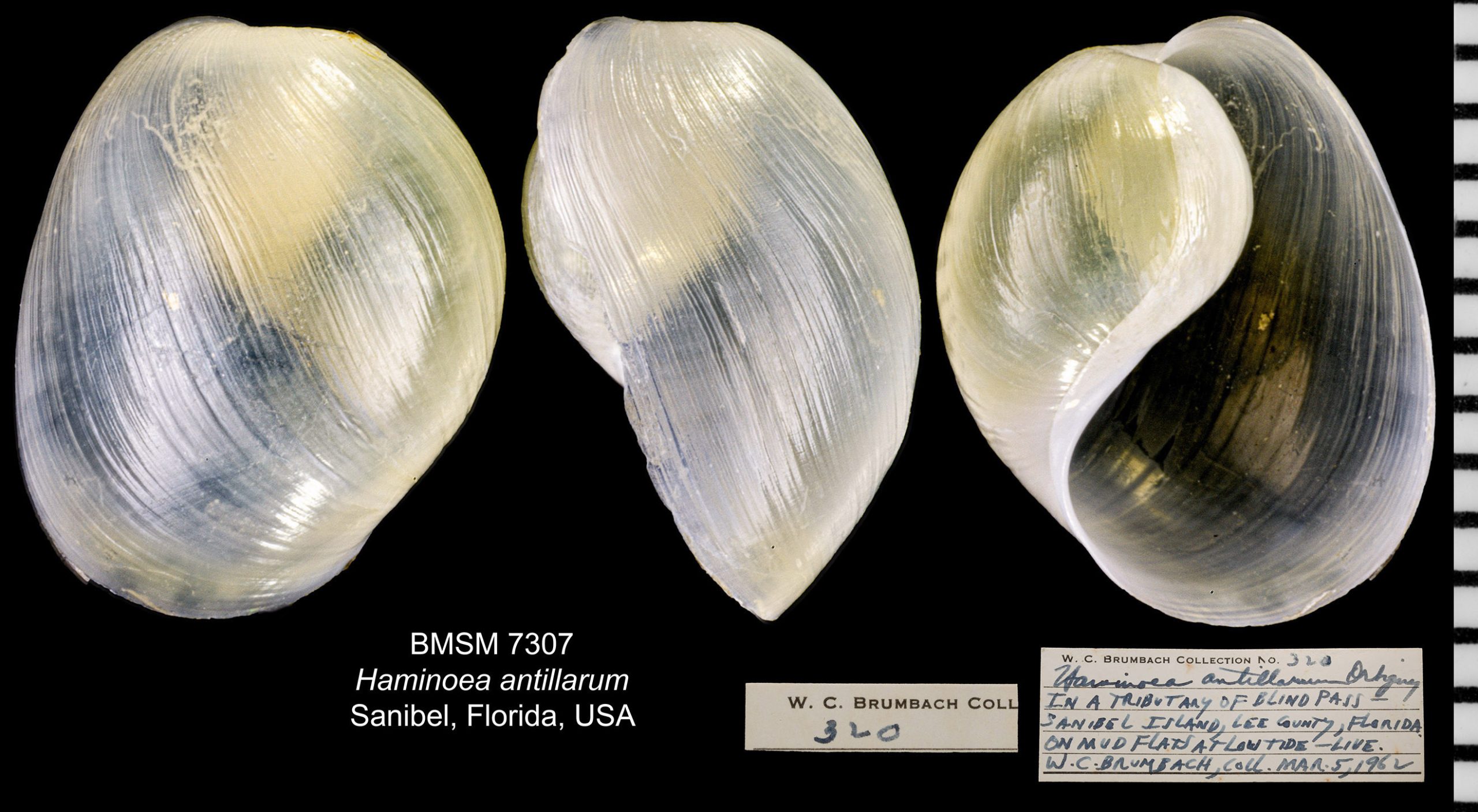
Haminoea antillarum (d’Orbigny, 1841), has a very thin, globose, and glass-like shell. Live animals can be seen, sometimes in larger numbers, in the bays and protected seagrass flats of Southwest Florida, in particular during the Spring. Live Antilles Glassy Bubbles completely envelop their shells with their bodies.
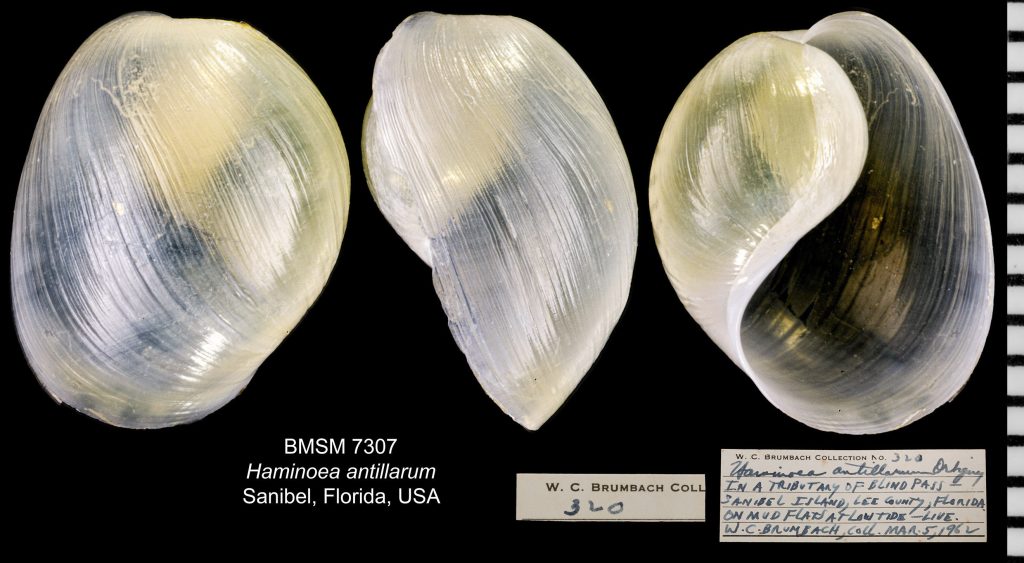
The species is hermaphroditic (both male and female reproductive tracts in the same individual), and the egg mass consists of a transparent and gelatinous, collar-shaped structure containing thousands of tiny, yellowish-green eggs. The shell in the illustration was collected on March 5, 1962, by William C. Brumbach near Blind Pass on Sanibel Island, Florida. Check the collection data for that specimen here. The image of the living Antilles Glass Bubble with egg mass was captured in 2005 in Sarasota Bay by Dr Ángel Valdés. Dr Valdés was the recipient of the 2005 R. T. Abbott Visiting Curatorship at the National Shell Museum & Aquarium.