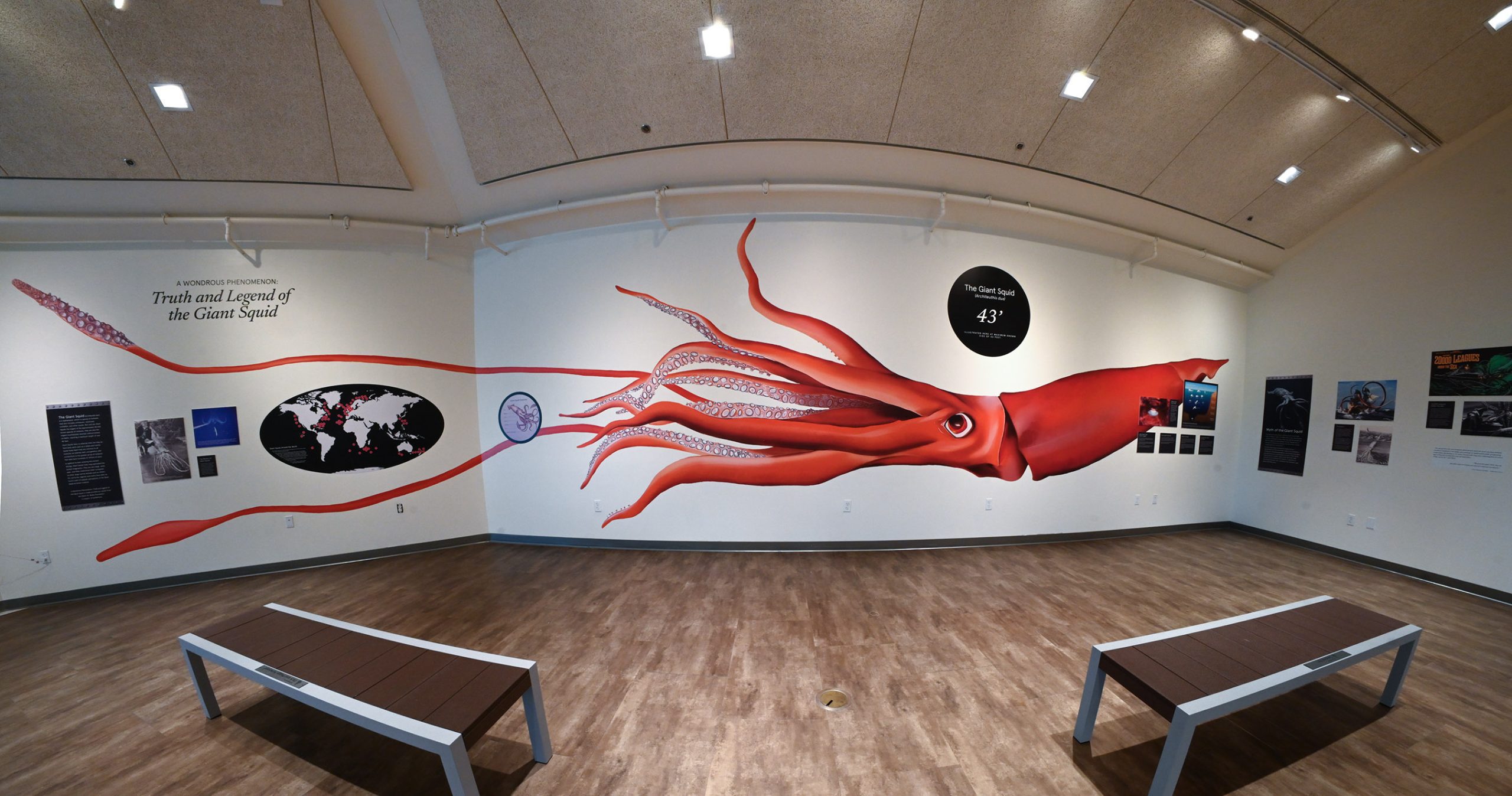
Architeuthis dux is linked to a sense of intrigue and wonder: For centuries all that we knew about the species was based on the observation of dead bodies and body parts such as arms, tentacles, or pieces of the mantle accidentally caught by fisherman or stranded on beaches. For a long time, scientists contemplated that these mollusks could reach beyond 18 meters (approximately 60 feet), but this was based on erroneous extrapolations of total length based on the size of those stranded body parts. Now we recognize that Giant Squids may reach 13 meters (approximately 43 feet).
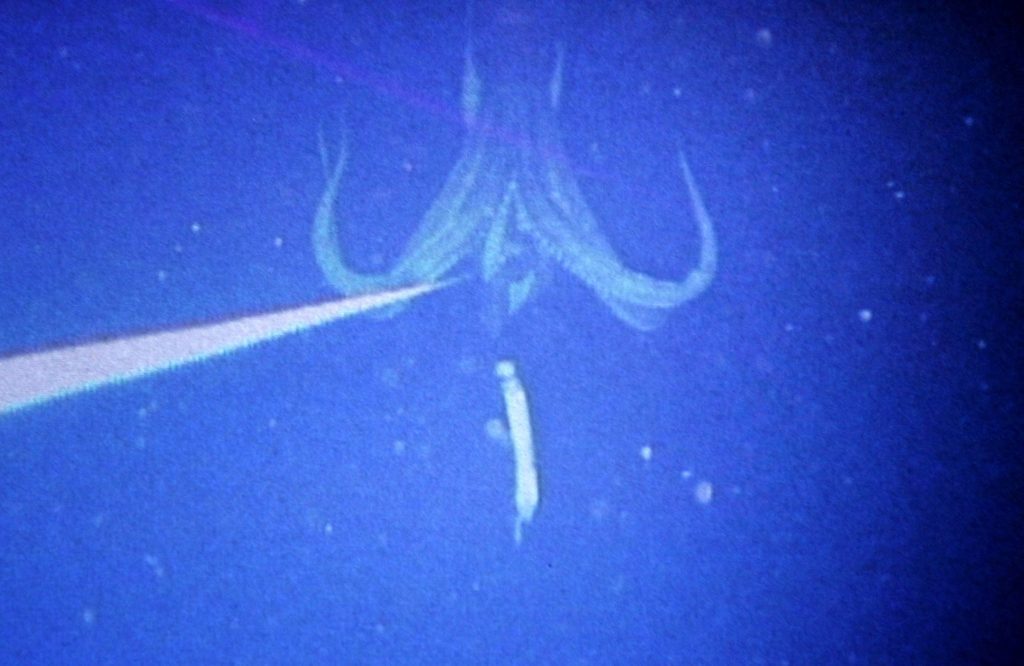
Although a lot had been written about Giant Squids, visual records of living Giant Squids only appeared in the 2000s. Giant Squids live deep in the oceans. A Giant Squid was photographed for the first the time in a series of still images taken in September 2004 off Japan by Dr Tsunemi Kubodera (National Science Museum, Tokyo) and Kyoichi Mori (Ogasawara Whale Watching Association, Tokyo). In 2012, a group of scientists from Japan’s National Science Museum led by Dr Kubodera, along with the Japanese public broadcaster NHK and the Discovery Channel, filmed a giant squid in its natural habitat for the first time.
Learn more about the Giant Squid, its natural history, ecology, and its strong impact on myth and fiction in the temporary exhibit A Wondrous Phenomenon: Truth and Legend of the Giant Squid, now on the second floor of the National Shell Museum & Aquarium. A Wondrous Phenomenon is made possible by a grant in support of special exhibitions from the Glenn W. Bailey Foundation.