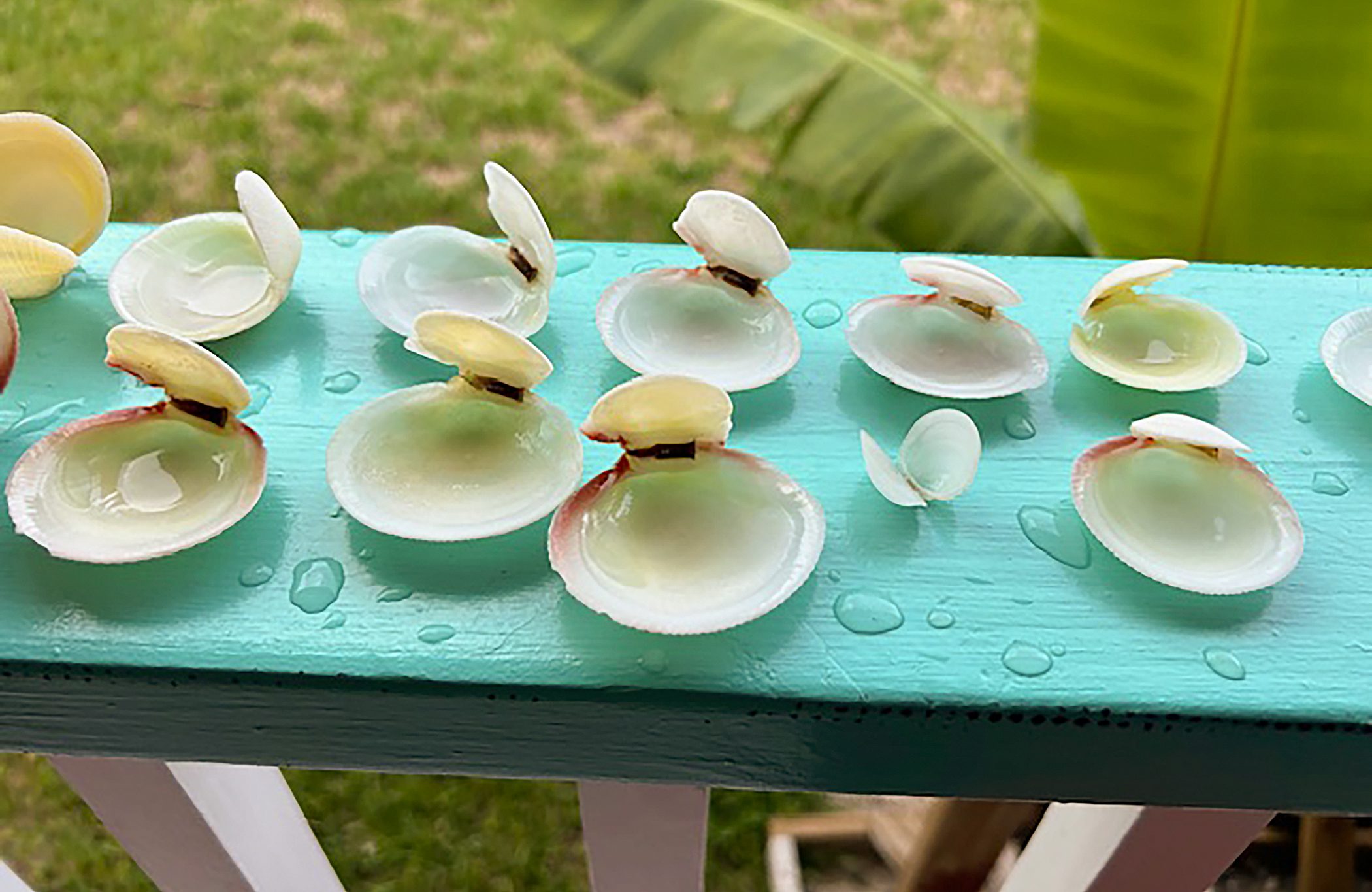
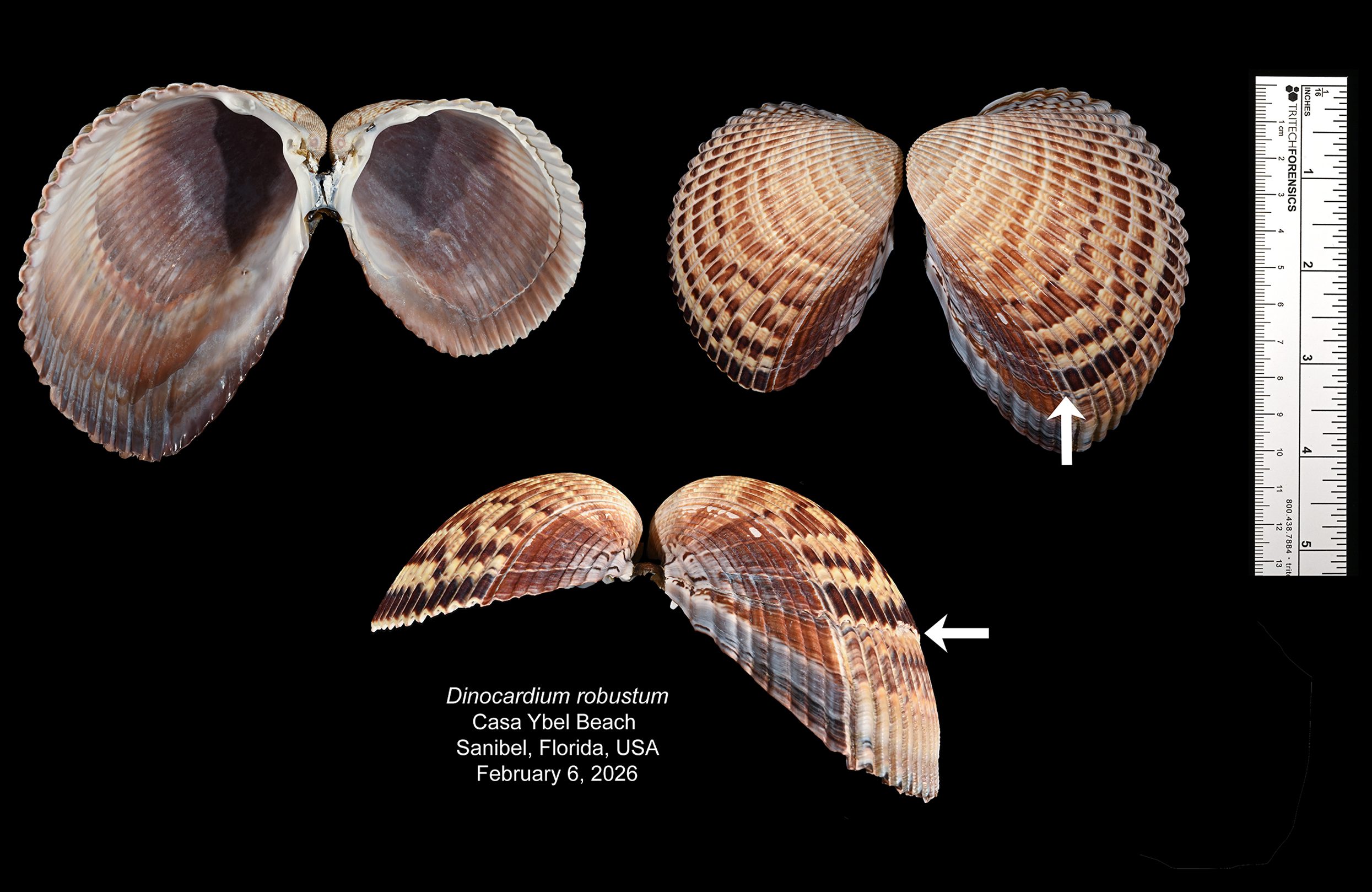
A couple of weeks ago, Jane Kintzi brought a complete shell (two articulated valves) of an Atlantic Giant Cockle (Dinocardium robustum) found this month on Sanibel. One of the valves of the cockle was much shorter than the other. The shell margin on that shorter valve is perfect, with no jagged edges. We had seen a similar situation on shells of Tiger Lucines (Codakia orbicularis) from Spanish Wells, Bahamas (see last photo below). It is clear to us that the shell (both valves) grew to normal size and that some kind of stress clipped one of the valves at some point after the shell was fully grown.
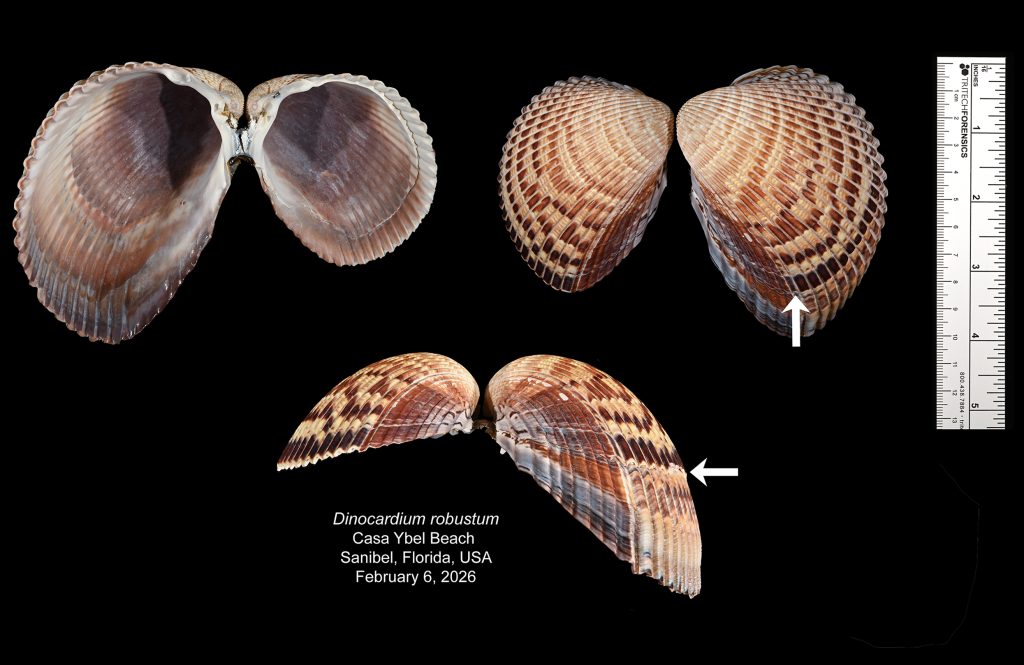
Remarkably, there is a correspondence between the shell margin of the shorter valve and a discontinuity (growth interruption) on the larger valve (arrows on the images, best seen on top-right image). That discontinuity may represent a weaker region of the shell, which facilitated fracture of the shell after death of the cockle or made it easier for a predator to crack the shell just so. Chris Takahashi (Honolulu, Hawai’i) commented in our relevant Facebook posting that he had “…found Cardium hawaiiensis like that in 60ft [depth]. No exposed mantle or soft parts when alive. The animal fabricated a curtain of chitinous semi-soft mantle [sic], to protect itself…” indicating that the animal could survive after injury to one of the valves. Any other suggestions as to what might have happened? Email me at jleal@shellmuseum.org.