Author Archives: José H. Leal

Mollusks: More Than A Shell

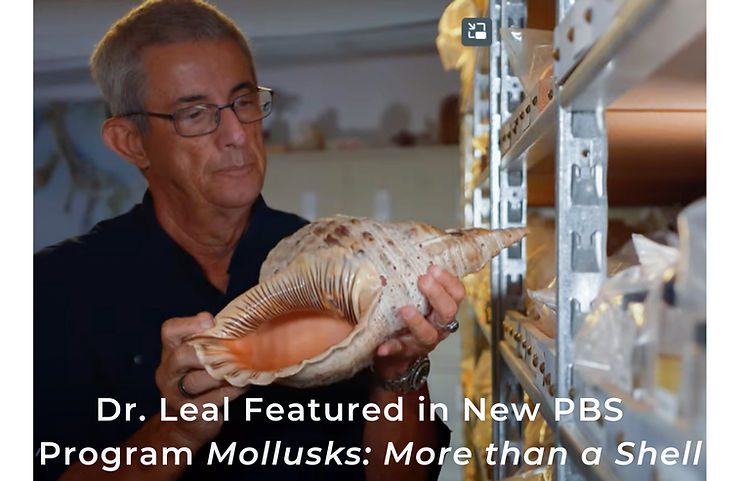
Don't miss the new episode of Changing Seas! Seashells, with their beautiful shapes and colors, have inspired humans since the dawn of time. Equally fascinating are the mollusks that make them, and their unique place in the web of life. Researchers and citizen scientists continue to make new discoveries, while a cutting-edge digital project makes vast research collections easily accessible online. In case you missed the premiere of the first episode of the fifteenth series of Changing Seas on WP
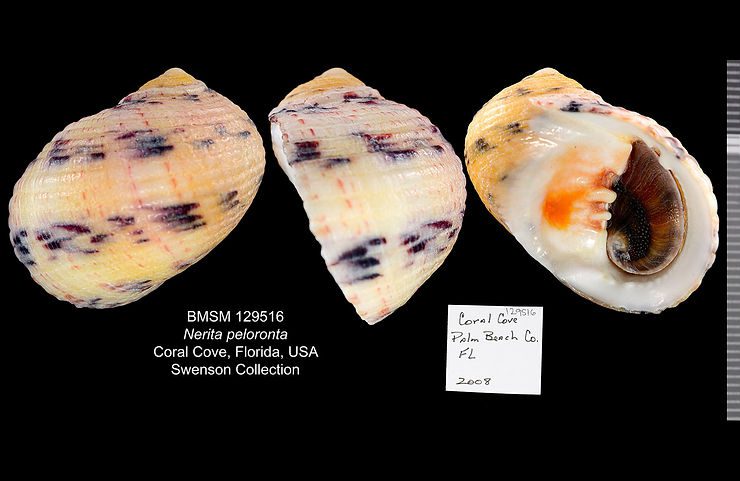
Shell of the Week: The Bleeding Tooth

Nerita peloronta is one of the iconic Florida shells, mostly due to splash of red color on the parietal shield, which, combined with the tooth-like projections on that area, gives the species its common name. The Bleeding Tooth can reach 47 mm (about 1.9 inches), has a thick, globose shell with sculpture of low spiral cords, and white color with grayish or dark-gray streaks. The operculum is hard, calcified, with pustules on the attachment surface. The species is found on the intertidal (between

Collection Work, Full Tilt

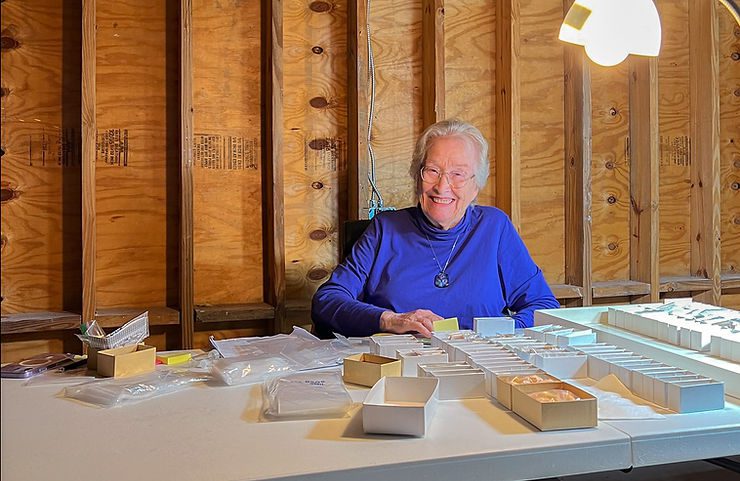
Work continues at a steady pace in the collection area here at the National Shell Museum, while staff awaits for the restoration of some of the walls and ceiling in that part of the building. As renovation of the Living Gallery on the ground floor of the Museum advances, curation, cataloging, and deployment of collection specimens on the third floor proceeds at a remarkable rate, despite damage perpetrated by Hurricane Ian. The bulk of ongoing collection work focuses on the National Science Foun

Thrilled With The Neptunea Award!

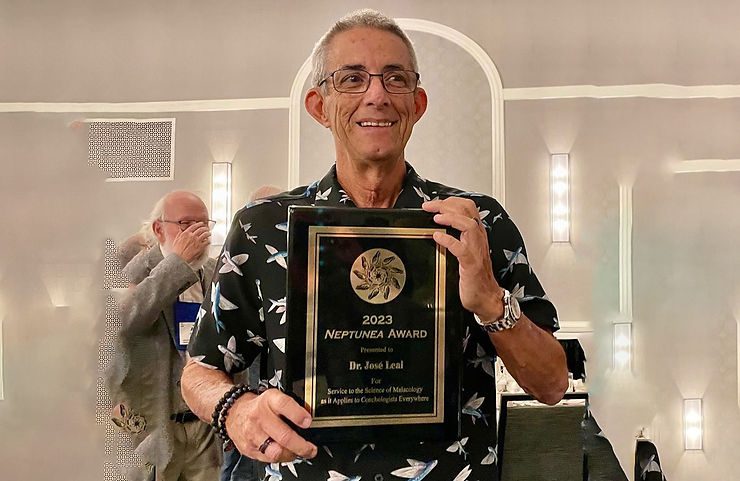
At the recent 2023 Conchologists of America Convention (COA) in Wilmington, North Carolina, I was honored with the celebrated Neptunea Award, along with my friends Bob and Alice Pace, and colleague (and friend) Dr Emily Vokes (not in the photo). The award was given for my “service to the science of Malacology as it applies to conchologists anywhere.” The honor is particularly meaningful to me, given that, as a professional malacologist, I always strived to narrow the perceived gaps between profe

Shell of the Week: The Depressed Top Snail

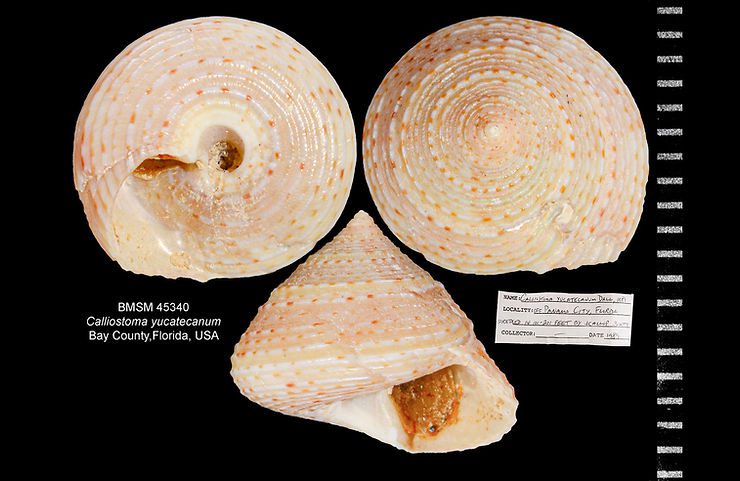
Calliostoma yucatecanum is one of the many eye-catching species of Calliostoma top snails found in moderately deep water off the southeastern USA and the Gulf of Mexico. Reaching about 16 mm (about 0.62 inch), the shell in this species is covered with spiral cords crossed by very fine axial lines. The color is cream-yellow, with little orangish marks flecked on the spiral ribs. The shell in the images was dredged in 1989 off Panama City (Florida Panhandle) between 30-60 m depth. Illustration is

Mollusks in “Changing Seas”

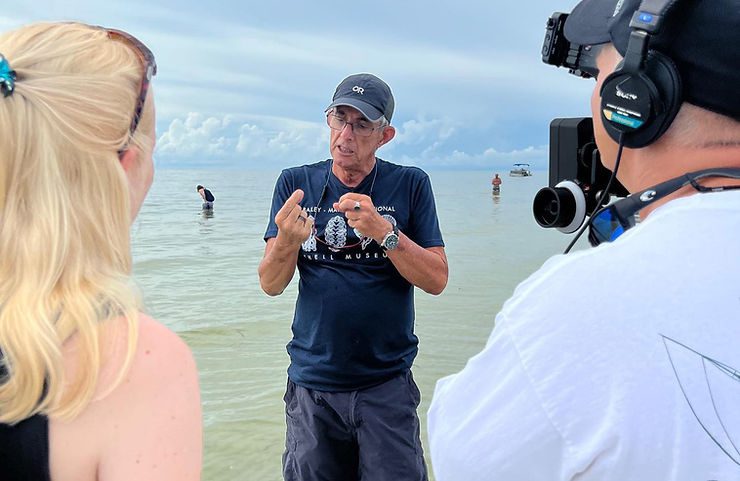
Early this Summer, the TV series “Changing Seas”, presented by WBPT-2 (South Florida PBS) station will feature an entire episode dedicated to mollusks and their shells, introducing the National Shell Museum as one of the relevant expert institutions. For now, check excerpts of the episode in the series of social media posts titled “Shells with Doc José Leal” featured in the “Changing Seas” and National Shell Museum’s Facebook and Instagram pages.@changingseas #changingseas https://www.facebook.c

Triton Children and Their Parents

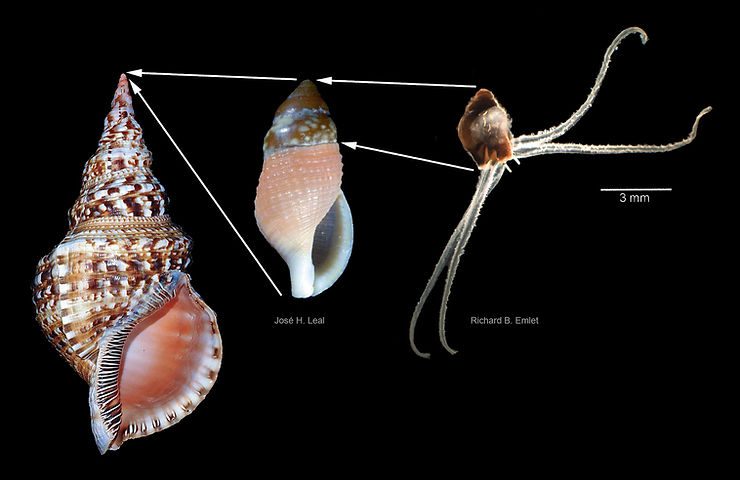
Last Monday I posted “When the children look nothing like their famous parents” in the Museum’s social media: The original image showed two distinctive stages in the life of the Atlantic Triton Trumpet, Charonia variegata, a large marine snail that can be found offshore along the Caribbean, the Gulf of Mexico, east coast of Florida, and the Keys. The 10 mm (about 3/8-inch) juvenile shell, shown here in the top-middle, looks nothing like the 330 mm (about 13-inches), adult shell of the same speci

Abalones Under Threat

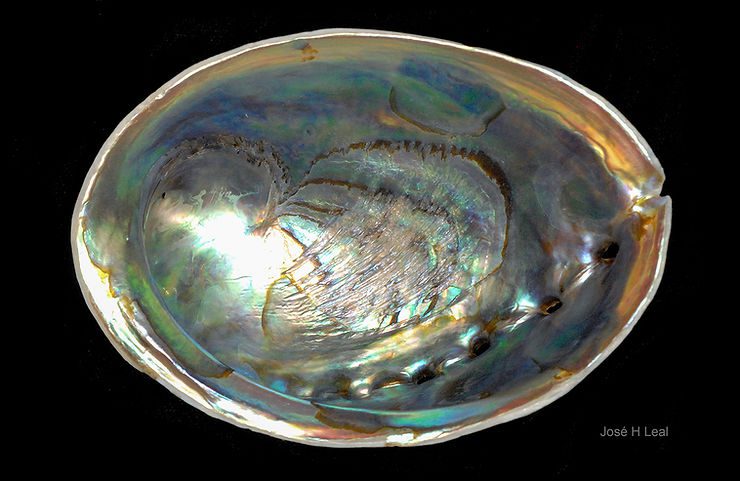
The International Union for Conservation of Nature (IUCN) has since 1964 published the Red List of Threatened Species. The list is a great tool, informing about biodiversity and conservation, and providing data for policy change and protection of natural resources. Invertebrates such as mollusks have traditionally been neglected and only relatively recently have found their way into the Red List. The abalone family Haliotidae is one of the few families of mollusks with all known species covered

Shell of the Week: The Knobbed Triton

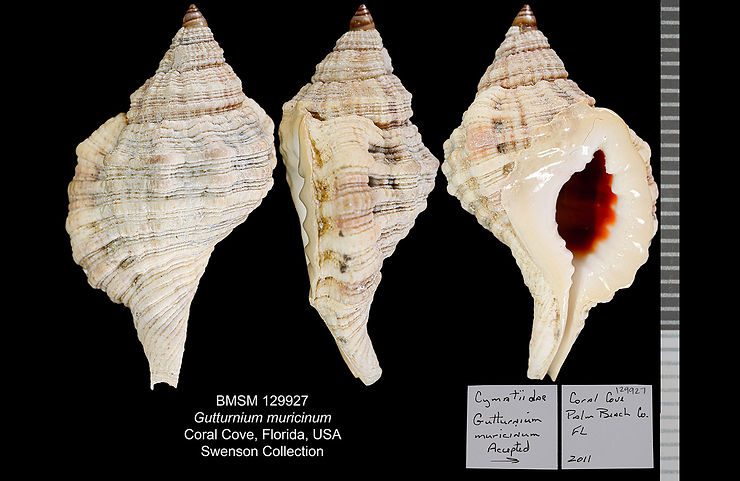
Also known as the Knobbly Triton, Gutturnium muricinum, is one among many triton species (family Cymatiidae) found along the east coast of Florida and the Florida Keys. (The genus Gutturnium is *monotypic*, i.e., it includes only one species.) The Knobbed Triton is also present in the southwestern Gulf of Mexico throughout the Caribbean south to Brazil. They can grow up to 75 mm (about three inches). Triton snails have larvae that spend weeks, sometimes months, living in open water. The protocon

The Thrush Cowrie Rides Again!

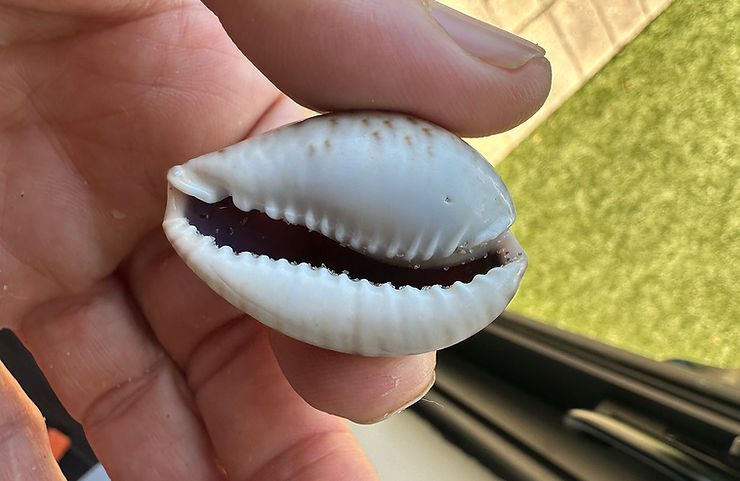
Another occurrence of the non-native Thrush Cowrie, Naria turdus, in Palm Beach County, this time by Trent Gamble, who stumbled on the shell on the beach in Boca Raton, about a mile north of Boca Inlet. Thanks to Bruce Haver, who photographed the shell, and Don Swenson, who made the connection with Bruce and Trent possible. The Thrush Cowrie was first reported in Florida last month, in paper co-authored by Anton Oleinik, José H. Leal, Anne Dupont, Nuch Uthairat. Read the paper here.#nariaturdus