Author Archives: José H. Leal

Shell of the Week: The Scaly Pearl Oyster

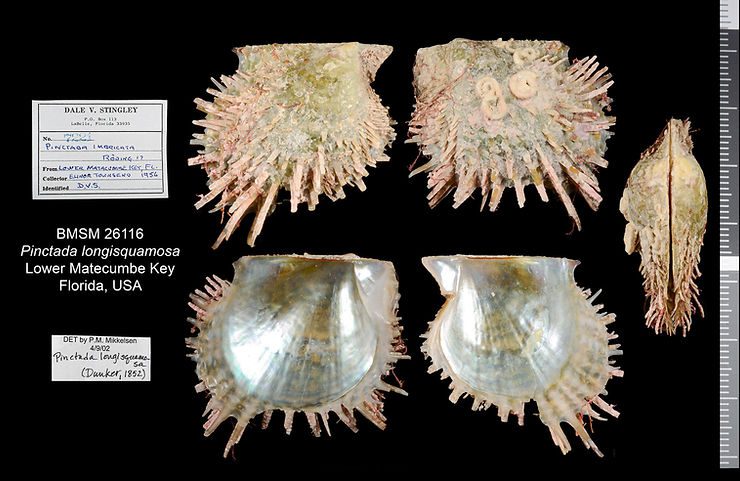
A not-so-common bivalve from Florida, Pinctada longisquamosa differs from the more commonly found Atlantic Pearl Oyster, Pinctada imbricata, among other characters, mainly by the long, overlapping projections on its periostracum (the external shell layer.) The species reaches 29 mm in size (about 1.15 inches), and is found from Bermuda, Bahamas, east coast of Florida and the Keys, throughout the southern Caribbean Sea to Venezuela and Colombia. Illustration created by Patricia A. Starkey for the
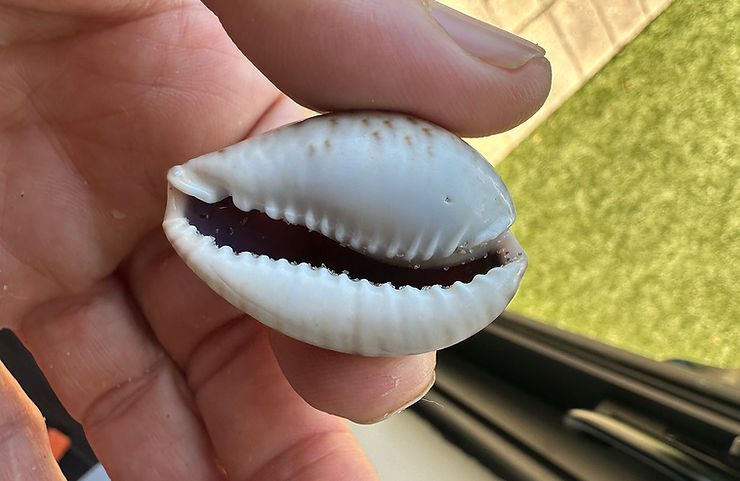
The Thrush Cowrie Rides Again!

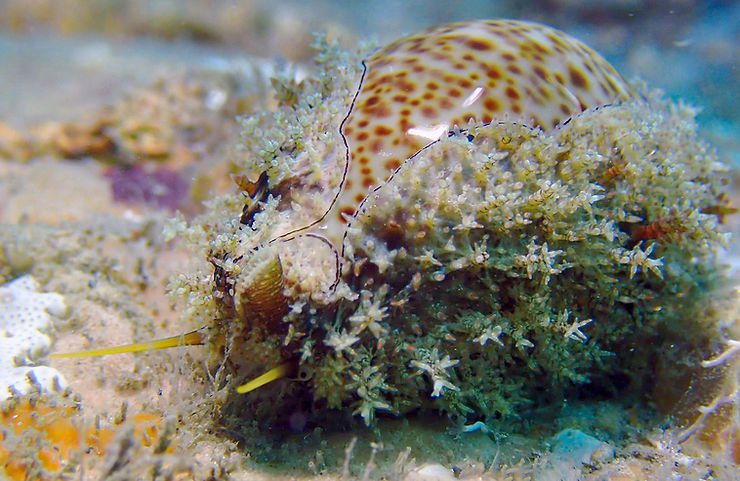
Another occurrence of the non-native Thrush Cowrie, Naria turdus, in Palm Beach County, this time by Trent Gamble, who stumbled on the shell on the beach in Boca Raton, about a mile north of Boca Inlet. Thanks to Bruce Haver, who photographed the shell, and Don Swenson, who made the connection with Bruce and Trent possible. The Thrush Cowrie was first reported in Florida last month, in paper co-authored by Anton Oleinik, José H. Leal, Anne Dupont, Nuch Uthairat. Read the paper here.#nariaturdus

Wrapping Up “Shell and Tell”

As the National Shell Museum reaches the crucial stage of its post-Hurricane Ian reconstruction period and once again closes its doors to the visiting public, time has come to thank the volunteers that staffed the Shell and Tell presentation on the second floor of the Museum. Starting last February 1st, when the Museum reopened temporarily, Kathy Kenley, Linda Kramer, Angela Marsland, Ann Moeder, brothers Cabe and Holt Rieck, and Karen Turner took turns bringing the program to fruition with dedi

FUM 2023, This Weekend!

The thirteenth meeting of Florida United Malacologists will take place this Saturday, April 15, at the Florida Fish & Wildlife Conservation Commission’s (FWC) Fish & Wildlife Research Institute (FWRI), in St. Petersburg, Florida. The one-day gathering typically includes presentations by researchers, enthusiasts, citizen scientists, educators, and students, and covers a broad swath of mollusk-related topics. This year’s event will include 15 presentations covering a broad swath of topics in malac

Nature, Red in Tooth and Claw

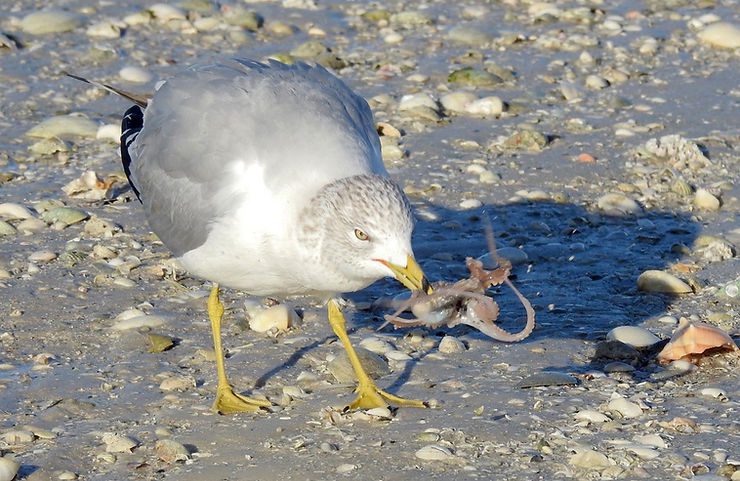
The above expression, immortalized by Lord Tennyson in his poem, “In Memoriam A.H.H.” serves as an appropriate caption for this powerful image by Amy Tripp of a Ring-billed Gull, Larus delawarensis, ready to eat what looks like a Pigmy Octopus, Octopus joubini. But in this case, the metaphor, which embodies the violent nature of predation, should be something like “Nature, clear in beak and claw,” as the “blood” of octopuses is clear-colored, and birds have beaks without teeth. Gulls are basica

Shell of the Week: The Salle Auger

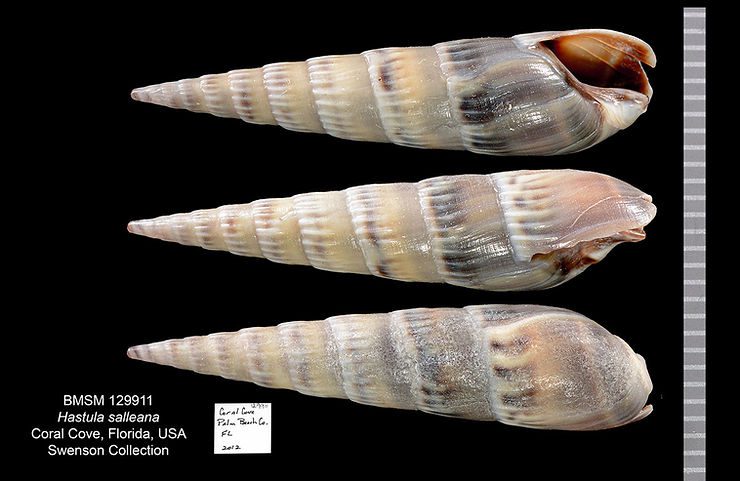
Hastula salleana (Deshayes, 1859), is a marine snail of the auger family Terebridae that may reach about 40 mm (about 1.6 inch) in height. Hastula augers inhabit sandy beaches, where they thrive along the boundary between land and water, being most active during ebbing tides. Hastula augers are known to feed on polychaete worms. They inject a cocktail of toxins into their prey using their hypodermic-needle-like radular teeth, in the same manner as their cousins, the cone snails. The species is f

Shell of the Week: The Smooth Sundial

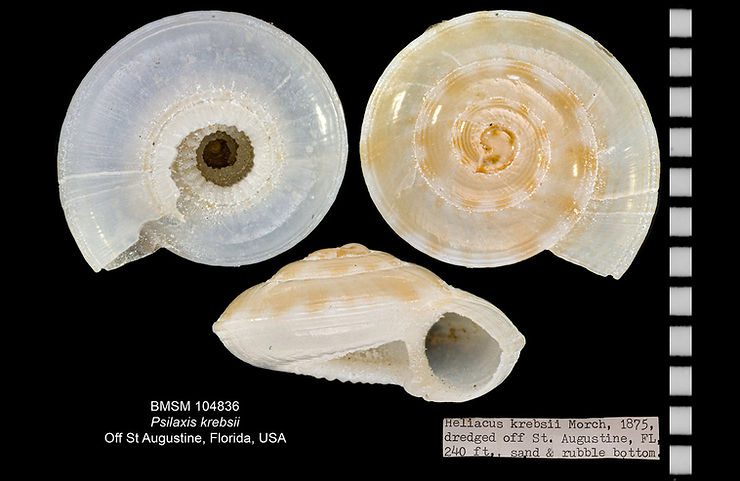
Psilaxis krebsii (Mörch, 1875) is a marine snail of the sundial family Architectonicidae that may reach about 14 mm (about 0.5 inch) in diameter. The characteristic “UFO-shaped” shell has slightly convex whorls; the shell surface is basically smooth, except for very weak spiral cords near the shell periphery (the “outer rim” of the shell) and a prominent cord at the periphery. The umbilicus is wide and deep, with the “staircase-like” edge that is typical of many sundial species. The background c

New Museum Research on Crown Conch Egg Capsules

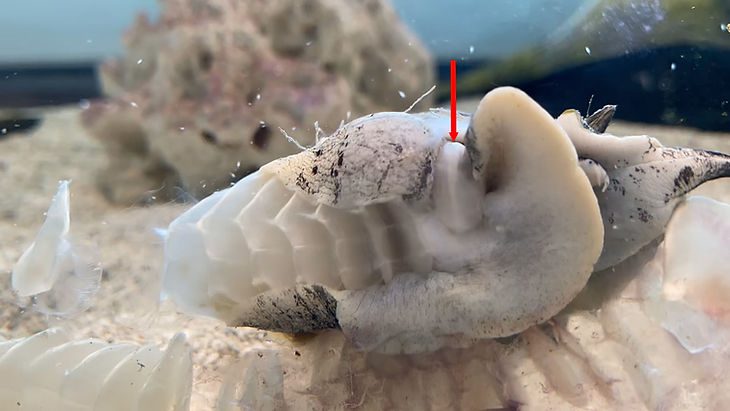
Did you ever wonder what exactly happens when a marine snail lays its egg capsules? A cool video clip of a female Crown Conch depositing its egg capsules is central to the short scientific note recently published by National Shell Museum staff explaining the process. The note, titled “Observations on the mechanism of egg capsule deposition in Melongena corona (Mollusca: Gastropoda) based on a time-lapse video,” by Carly Hulse, José H. Leal, and Joseph R. Powell, was accepted for publication in t

The Allure of Small Size

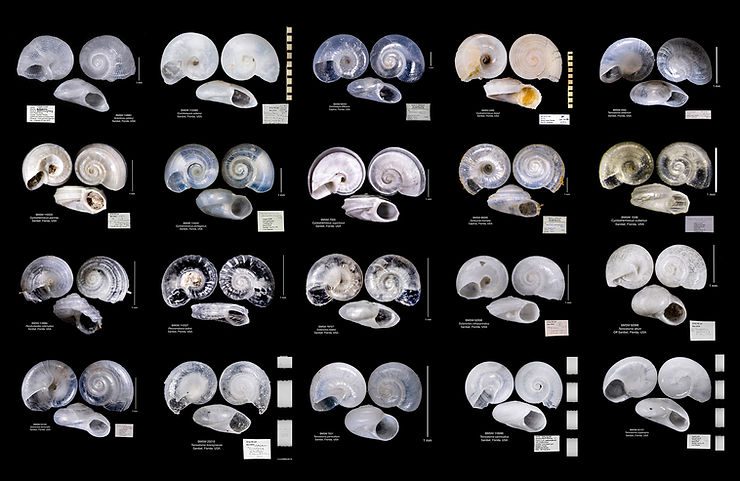
Micromollusks, by definition, never grow larger than 5 mm (0.2 inches). Despite their small size, micromollusks may have shells as attractive as those of their larger-sized cousins, and have life processes just as complex. Scientific surveys done in different regions of the planet indicate that very large shares of the marine mollusk biodiversity in those areas consist of micromollusks. For instance, on Sanibel and Captiva islands (Florida) alone, there are at least 20 species of vitrinellas (ph

The Thrush Cowrie in South Florida

In a research note to be published next week in the Museum’s shell-science journal The Nautilus, Anton E. Oleinik, José H. Leal, Anne DuPont, and Nuch Uthairat record and discuss the recent finding of the non-indigenous Thrush Cowrie, Naria turdus, in the waters of Lake Worth Lagoon, in Palm Beach County, Florida. The species, which had previously been documented in several Caribbean islands, is native to the Red Sea and western Indian Ocean. It’d be interesting to hear from our readers in case