Author Archives: José H. Leal

Shell of the Week: The Dark Worm Snail

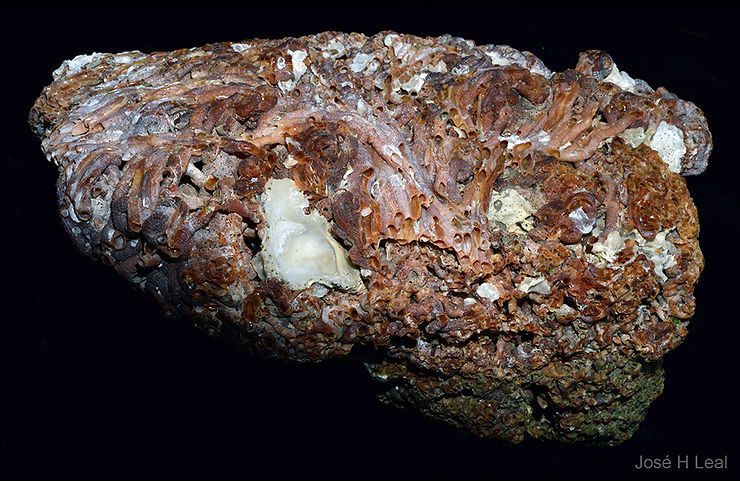
The shells of Petaloconchus nigricans (Dall, 1884) are long, narrow, brown tubes sculpted with longitudinal ridges. As with other members of the family Vermetidae, the Dark Worm Snails live in agglomerations that form massive structures. The largest such cluster from Sanibel in the National Shell Museum Collection was found in September 2016 by Michael Reardon. That cluster (photo) measures 23 cm (about 9 inches), and the largest shell aperture diameter in this cluster measures about 3 mm (about
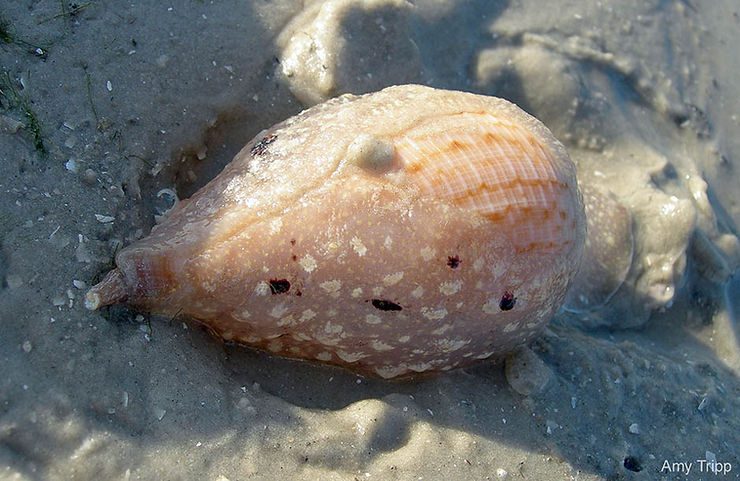
The Atlantic Fig and Her Egg Capsules

The Atlantic Fig Snail, Ficus papyratia (Say, 1822), makes a thin shell that is shaped like a slender fig or pear. The shell opening, or aperture, tapers gently toward the end of the anterior canal. The shell color is pinkish-gray to light-tan, and is sculptured with a delicate net-like pattern. The animal is cream-colored with dark and whitish spots.The photo of the live fig snail above was taken in 2015 on Kice Island, Collier County, Florida, by Amy Tripp. The snail’s mantle covers almost com

Shell of the Week: The Brazilian Spurilla

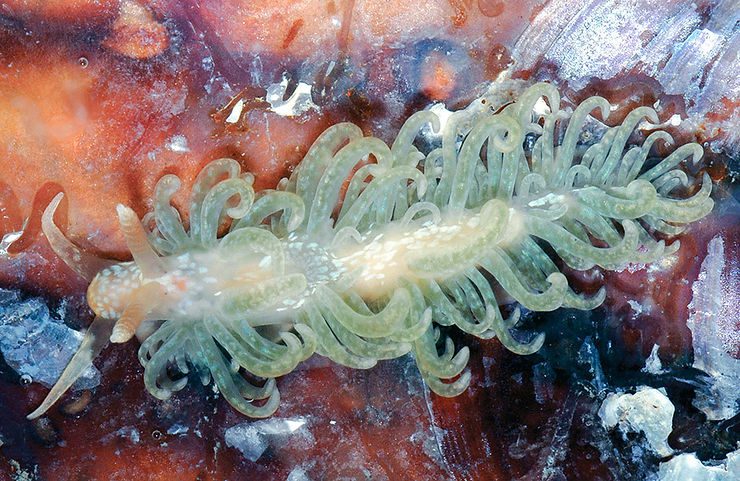
Spurilla braziliana MacFarland, 1909, is a relatively large, shell-less sea slug that reaches about 80 mm (about 3 inches). The curly projections on the “back” of the slug are known as cerata; each ceratum includes an extension of the animal’s digestive gland. The Brazilian Spurilla feeds on sea-anemones, and may assimilate cnidocytes (stinging cells) the from sea-anemones it feeds into its own body to use as a defensive mechanism. Its color is variable, covering light-pink, orange, green, light

Cool Local Snail: Cloudy Periwinkle

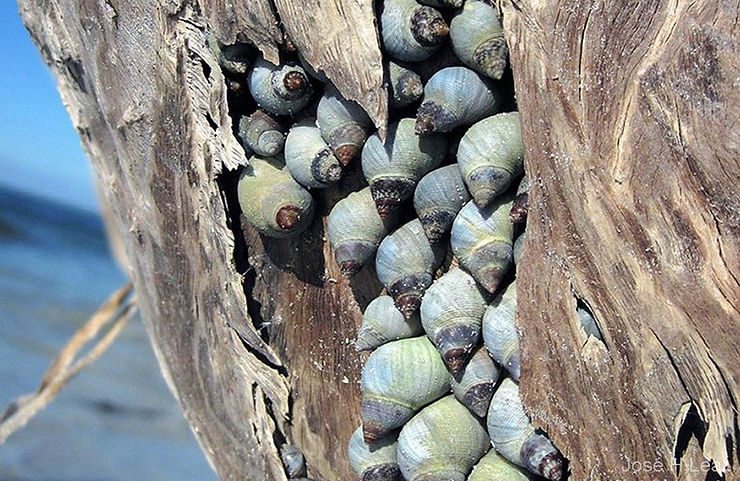
The Cloudy Periwinkle, Littoraria nebulosa (Lamarck, 1822), is found along the coast of Southwest Florida, living above the high tide line, mostly on dead tree trunks and branches. Periwinkles are marine gastropods that became almost completely independent of the aquatic environment. They feed on microalgae and fungi that grow on hard surfaces above the high tide line. Females return to seawater to lay egg their egg capsules, but, other than that, they spend their entire lives in the terrestria

Shell of the Week: The Little Speckled Slipper Snail

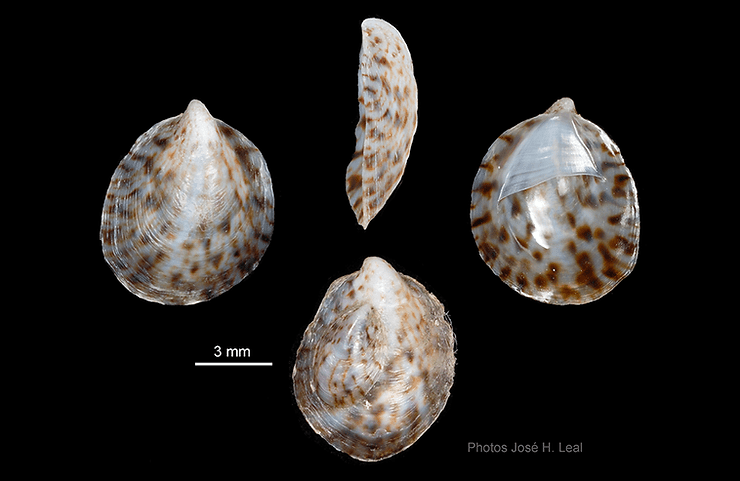
Crepidula ustulatulina Collin, 2000, is a local gastropod that reaches only about 13 mm (about 0.5 inch). Its shell is oval, thin, and convex. Slipper snails have an unusual shelf that serves as protection to the animal’s most delicate organs. The shelf margin in this species is arched and extends further forward (downward in the photos) on its left side. As the common name of the species indicates, the shell usually displays a speckled color pattern, with distinct chestnut-brown spots or streak

Fighting-Conch Sushi?

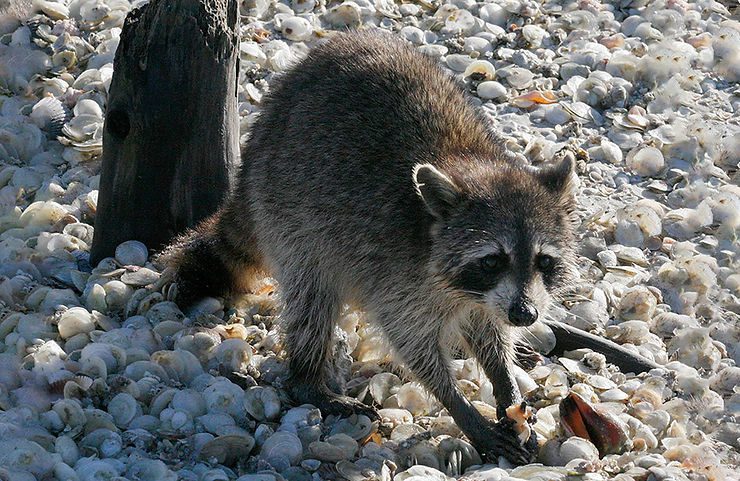
Northern Racoons, Procyon lotor (Linnaeus, 1758), eat mollusks and other types of shellfish. (The "other" racoon species, Procyon cancrivorus (Cuvier, 1798), found in Central and South America, is named after similar, crab-eating habits.) The young racoon in this cool photo was caught red-handed, half-way through a meal of Florida Fighting Conch, Strombus alatus (Gmelin, 1791). The image is by National Shell Museum collaborator Amy Tripp, who captured the moment at low tide on Kice Island, Flor

Pink Slugs and the Bushfire

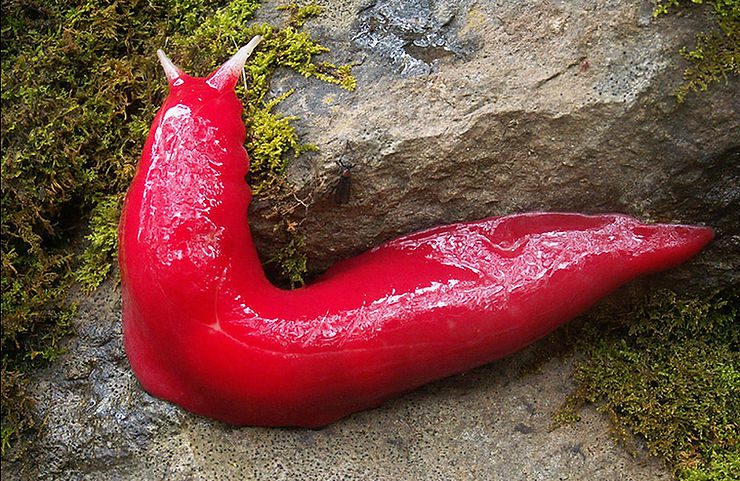
A few years ago, I wrote a brief piece in this column about the discovery of the Mount Kaputar Pink Slug, a species in the genus Triboniophorus, family Athoracophoridae. Following the recent bushfires in southeastern Australia, the giant (20 cm, about 8 inches), shocking-pink creature is back in the news. The species is part of a small group of land mollusks that are endemic to area of Mount Kaputar National Park. Endemics are species exclusive to a restricted geographic area. The Pink Slug appa

Shell of the Week: The Scotch Bonnet

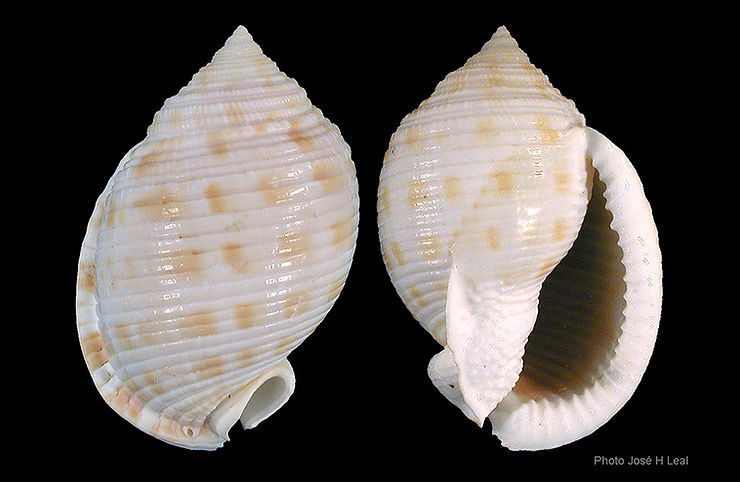
What can I say about Semicassis granulata (Born, 1778) that hasn’t already been said? One of the prized local finds on the barrier islands of Southwest Florida, the Scotch Bonnet is rarely found locally, being apparently more common on the open beaches of the mid-Atlantic states, from Florida up to North Carolina (the species is the State Shell of the latter state.) Its attractive shell may reach up to 10 cm (about 4 inches) and is egg-shaped, with a delicate grid-like (cancellate) sculpture, an

Striate Piddocks: Stowaways for Life

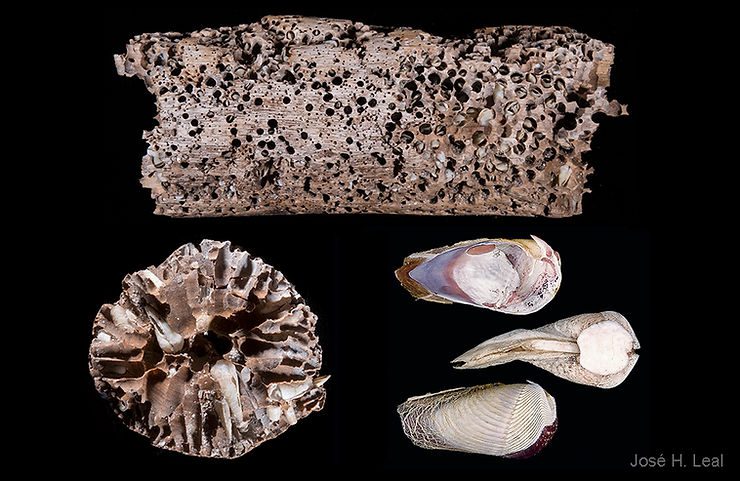
The Striate Piddock, Martesia striata (Linnaeus, 1758) is one of the species of wood-boring bivalves found along the coast of SW Florida. Its shells may be found on local beaches, always confined to pieces of driftwood, such as the little (11 cm, or about 4.5-inch) log in the top part of the picture. The log is riddled with the remnants of a few hundred Striate Piddocks. They may grow to be more than an inch long, and have free-living larvae that live in excess of a month drifting in the ocean.

Giant Squid Genome Unveiled!

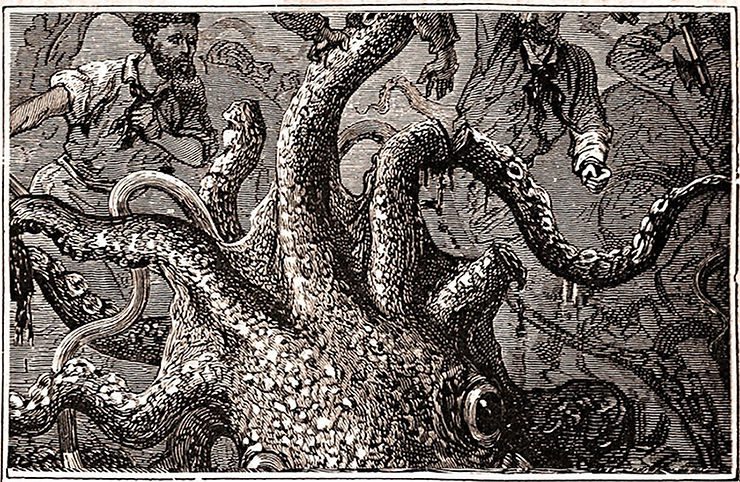
The Giant Squid, Architeuthis dux Steenstrup, 1857, is the largest living invertebrate, with females attaining about 13 m (43 ft) in length. The species genome was recently unraveled by a team of scientists led by Rute da Fonseca of the University of Copenhagen, Denmark. The genome is the total DNA set of an organism, a system that contains all the hereditary information for a given species. Complete sets of the genome of an organism are included in all cells that have a nucleus.The results of t