Author Archives: José H. Leal

Shell of the Week: The Prea Sea Slug

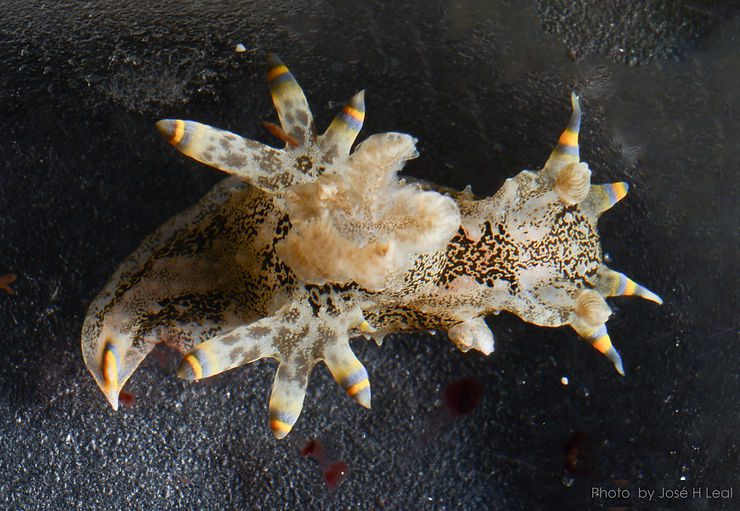
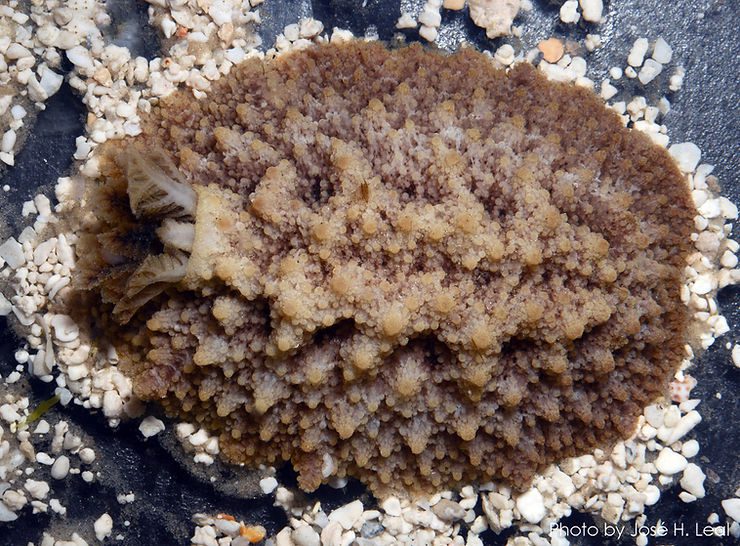
The Prea Sea Slug, Sclerodoris prea (Ev. Marcus & Er. Marcus, 1967) is a nudibranch gastropod mollusk that measures about 40 mm (about 1.5 inch). Nudibranchs are shell-less sea slugs that bear their respiratory organs, the “gills”, externally (the term Nudibranchia is a combination of the Latin word for naked, nudus, and the Greek word for gills, branchia.) Although I don’t know this for a fact, it is very likely that zoologists Eveline and Ernest Marcus named the species after another animal, t
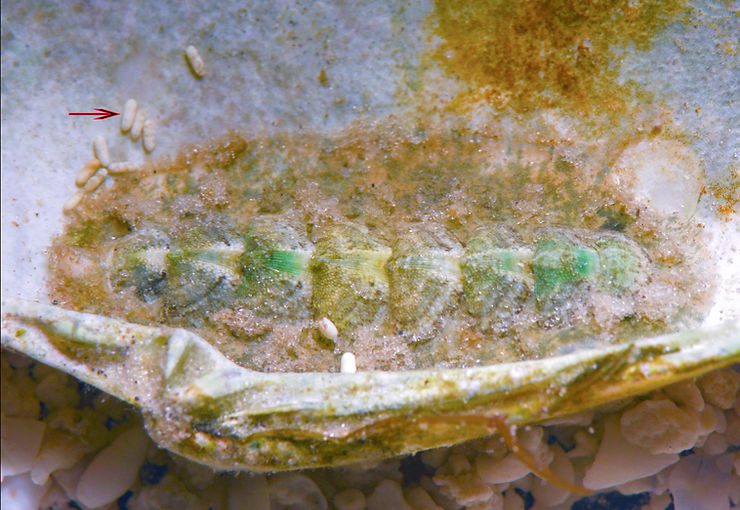
Chiton Poop!

A couple of weeks ago I photographed a live Striate Glass-hair Chiton, Acanthochitona pygmaea. (Chitons are usually elliptical mollusks with eight shelly plates.) The chiton was brought to the Museum by Lorin Buckner, who found it near the Sanibel Causeway. After downloading the images from my camera to the computer, I discovered that the 12 mm-long (about 0.5 inch) mollusk had small fecal pellets (arrow in photo) near its posterior end (left end of the image). Fecal pellets are agglutinated le

Shell of the Week: The Plicate Mangelia

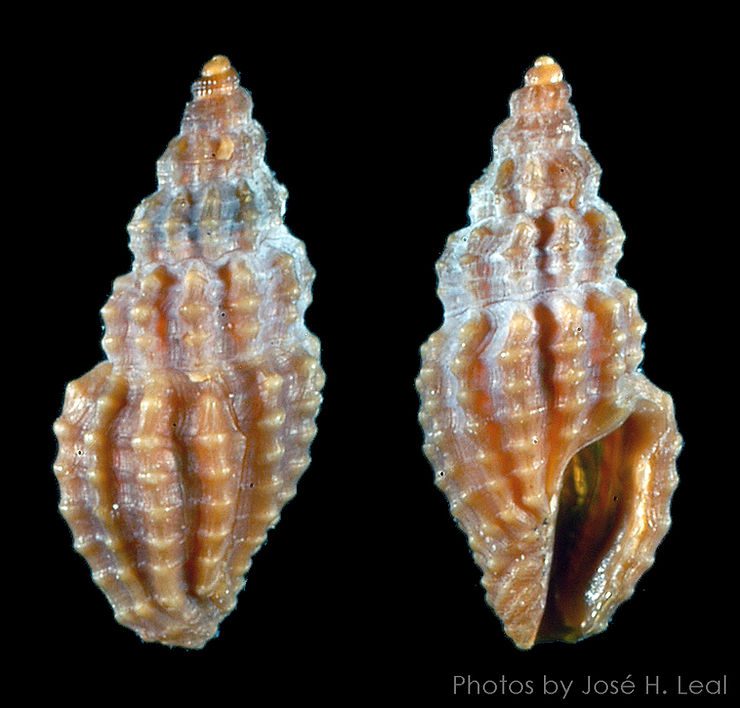
At 6 mm in length, Pyrgocythara plicosa (C.B. Adams, 1850) is one of the local small-sized gastropods. The shell is elongate-fusiform, with the spire (coiled part minus last whorl) measuring about half shell length. The sculpture consists of 11­−12 strong axial ribs crossed by about 5−6 spiral cords. The aperture has a strong indentation on the internal side of outer lip, and shell color is light-brown to reddish-brown, with bluish-white remnants of a periostracum. The Plicate Mangelia, Pyrgocyt

A Cool Sea Slug

Nudibranchs are shell-less sea slugs that usually bear their gills conspicuously on the back side of their bodies. In addition, they more often than not rely on chemical substances rather than on a shell for overall protection. The sea slug Polycera hummi Abbott, 1952 (photo) may reach about 20 mm (a little less than an inch) in size, and may be found from North Carolina through Florida and the Gulf. That colorful species was named in 1952 by Shell Museum's Founding Director Robert Tucker Abbot

Digital Imaging Project Launched

Last week the Museum hired photographers and computer graphics professionals James Kelly and Damon May, launching the core phase of its Institute of Museum and Library Services (IMLS)-sponsored Digital Imaging Project. James and Damon started photographing materials from our collection for online posting, as part of an endeavor that will make available about 9,200 collection lots (holdings) to researchers, aficionado(a)s, citizen scientists, students, and anyone interested in examining the imag

Shell of the Week: The Stearns Dove Snail

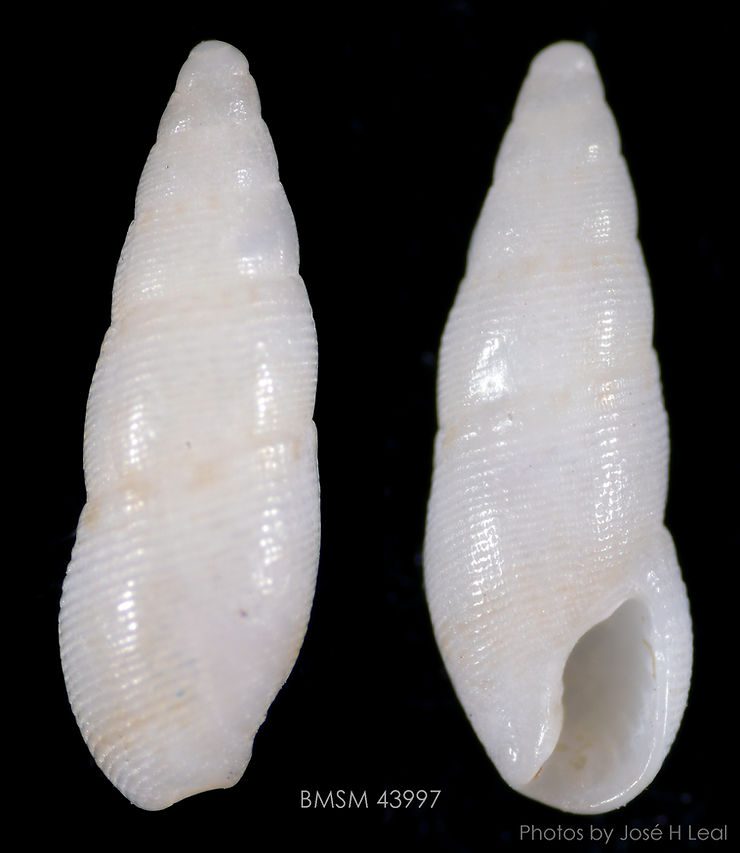
At only 5 mm (0.2 in inch) in maximum size, Aesopus stearnsii Tryon, 1843, is one of the smallest members of the dove snail family Columbellidae found on the beaches of Southwest Florida. Its shell is relatively slender for the family, with the aperture (opening) spanning about 1/3 to ¼ of shell length. The shell sculpture shows very narrow, etched spiral lines. The color is cream color, usually with a faint orange-brown band just below the suture (the line separating two whorls). The photo show

“Blue” Cloudy Periwinkles

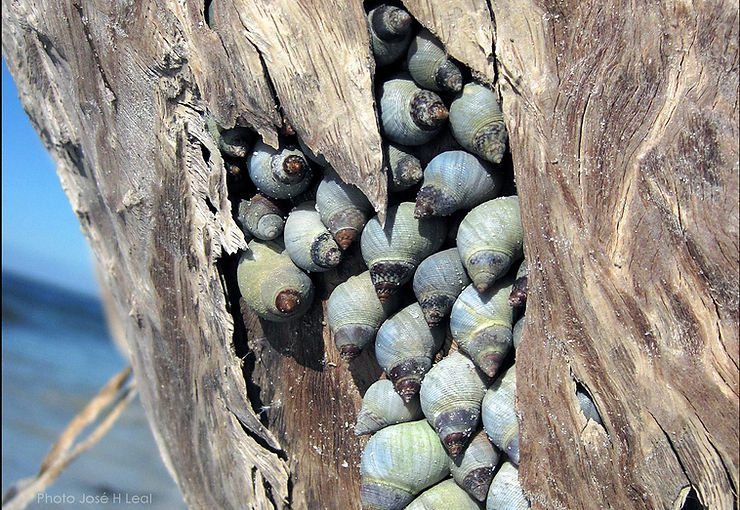
The Cloudy Periwinkle, Littoraria nebulosa (Lamarck, 1822), is found along the coast of Southwest Florida and most of the tropical western Atlantic. They live high above the high tide line, mostly on dead tree trunks and branches, where they graze on microalgae and fungi. Periwinkles are marine gastropods that became almost completely independent of the aquatic environment. I took this photo at Cayo Costa State Park, two islands north of Captiva Island. The image shows unusually bluish-colored

Shell of the Week: The Tongue Auger

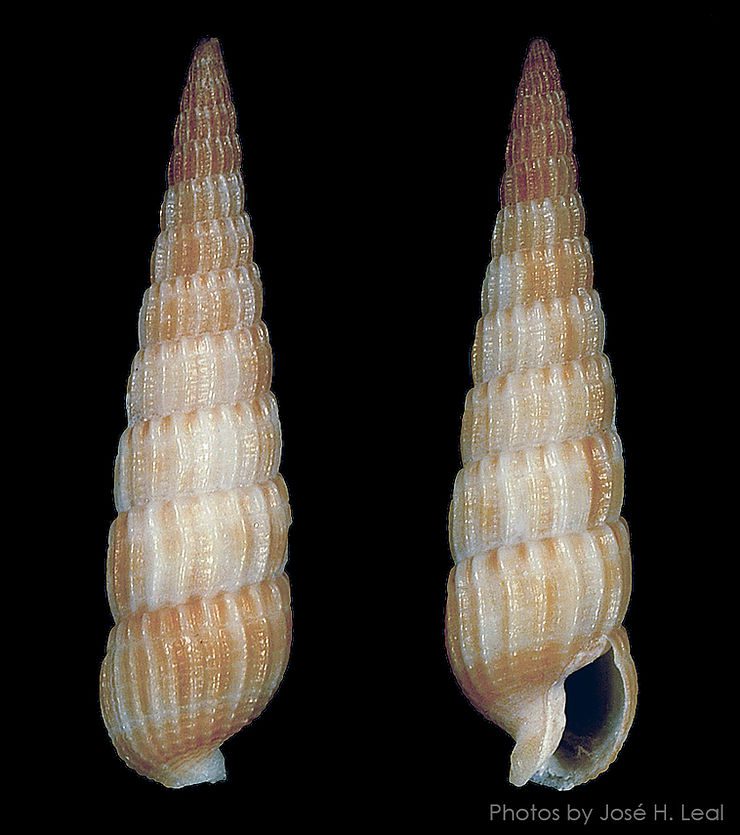
Terebra glossema Schwengel, 1942 is the rarest of the four local shallow-water species of the auger family Terebridae. It resembles the Eastern Auger, Terebra dislocata, but differs from that by fainter spiral lines crossing the axial (“vertical”) ribs, whorls with more convex profile, and less “stepped” whorls. The shell measures a little more than one inch (25 mm), and color patterns range from cream to light-brownish to orange-brown, sometimes with irregular bands. The Tongue Auger, Terebra g

Little Shells, Little Boxes!

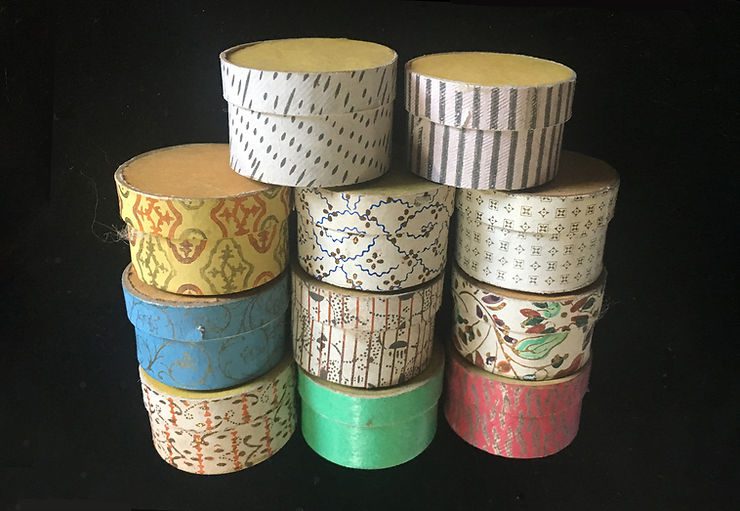
I recently found these little 1.5-inch boxes among old collection materials here at the Museum. The little cardboard containers in the photo, resembling miniature hat boxes, held shells donated to the Museum in the late 1990s by the Smithsonian Institution’s National Museum of Natural History). During the process of establishing the Museum collection, our Founding Director Robert Tucker Abbott (who had been an Assistant Curator at the Smithsonian), negotiated the donation of a large number of d

What’s With That Protoconch?

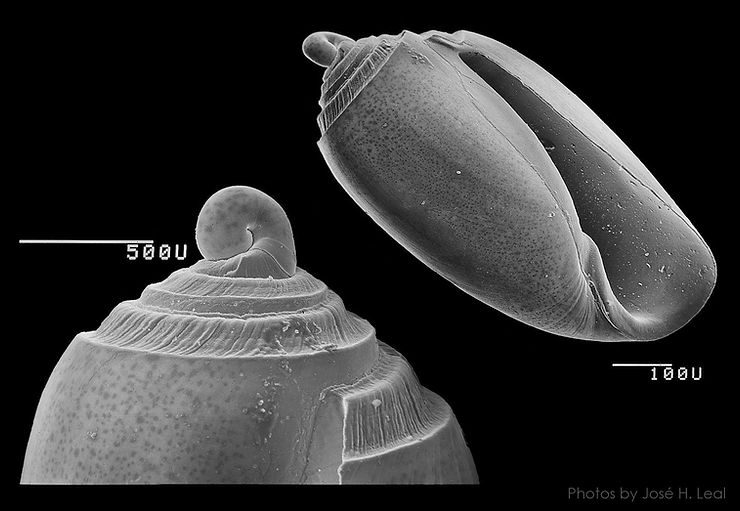
This unidentified Acteocina "canoe bubble snail" is found on the shores of Fernando de Noronha, an oceanic archipelago located off the coast of northeastern Brazil. The 3.5 mm (about 0.14 inch) adult shell displays on its apex ("top" of the shell) the remnants of the larval shell, or protoconch. Members of the family Acteocinidae have unusual heterostrophic protoconchs, in which the direction of coiling during shell growth changes by about 90 degrees at the shift between larva to adult. The res