A New Find
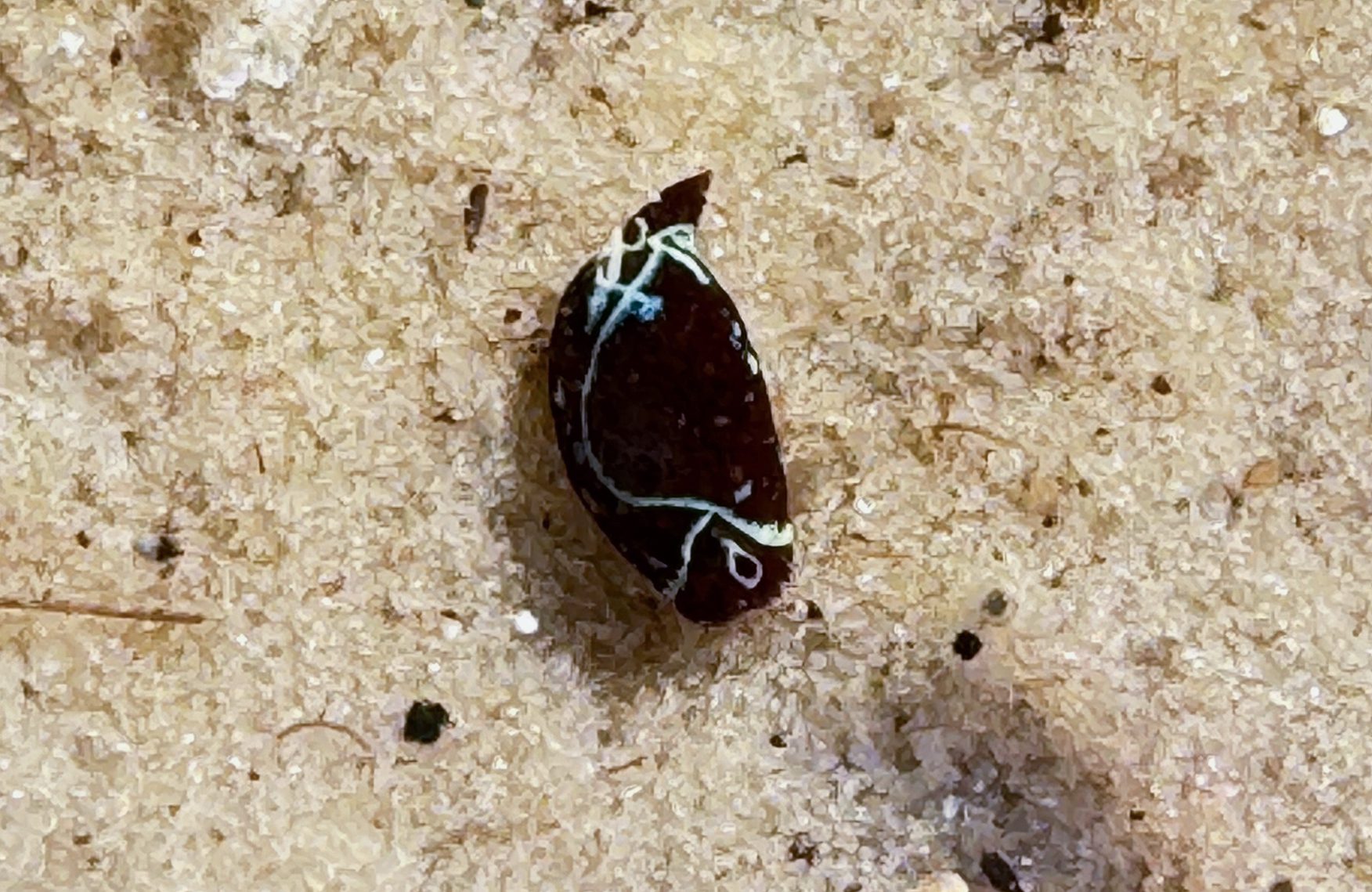
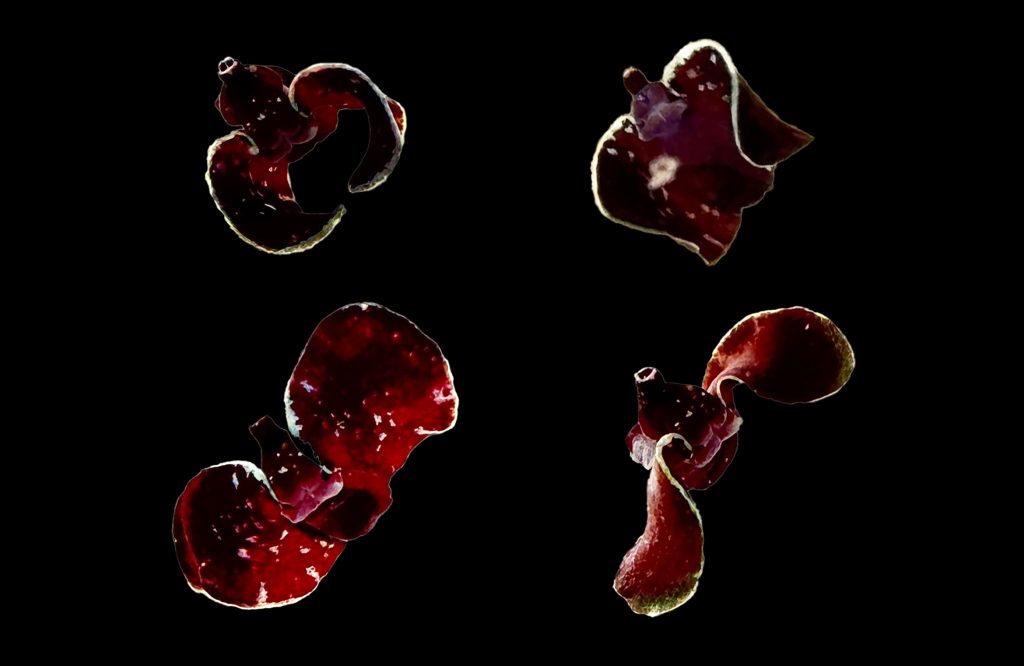
Last Tuesday, I was going about my workday at the Museum when I received a phone call from Debi McBroom and husband Barry. Debi and Barry were at Bunche Beach in Fort Myers, accompanied by Ken Piech. Over the phone, Debi was thrilled to inform me that Barry had found, in her words “this very small, black sea hare”. She described its behavior as “beating wing-like expansions of its body to swim like the Spanish Dancer nudibranch”. At that point, I was already receiving, via cell phone, images and a video of the small sea slug sent by Barry. And Debi was telling me that they were finding more specimens! I opened the phone images and quickly reached for the “Caribbean Sea Slugs”* identification manual (believe it or not, that was in a pile of books just under my desk). Leafing through its pages, I hit the jackpot: they had discovered a local population of the Flapping Dingbat (Gastropteron chacmol Gosliner, 1989), a head-shield slug related to bubble snails.
The Slug
The species reaches only about 10 mm (0.4 inch). Its color varies from deep red to black and the parapodia (the flapping “wings”) may have bright white or yellow edges. They have an internal shell and the head of the slug bears a well-defined siphon (clearly seen in Barry’s photos). These slugs live in sand and are capable swimmers, being able to move through the water for lengthy periods of time.
Geographic Distribution
The species is known from the east coast of Florida and the Florida Keys, south through the Caribbean to Brazil. However, a search in large collection data aggregators such as GBIF and InvertEBase and information in iNaturalist revealed this to be the first time the species has been recorded anywhere along the Gulf Coast of the US, including Southwest Florida. Watch this cool video shot by Barry McBroom at Bunche Beach, Fort Myers, Florida:
*Valdés, Á, D Hamman, DW Behrens, A DuPont, A. 2006. Caribbean Sea Slugs: A field guide to the opisthobranch mollusks from the tropical northwestern Atlantic. Sea Challengers natural History Books, Gig Harbor, vii + 289 pp.